
Are athletes of high impact sports with a history of concussion more likely to sustain a subsequent ACL injury: A Literature Review
Dennis Fernandes
Co-Presenters: Joshua Medina, Nathanael Burrell
College: The College of Health Professions and Human Services
Major: Physical Therapy (DPT)
Faculty Research Mentor: Jenna Tucker
Abstract:
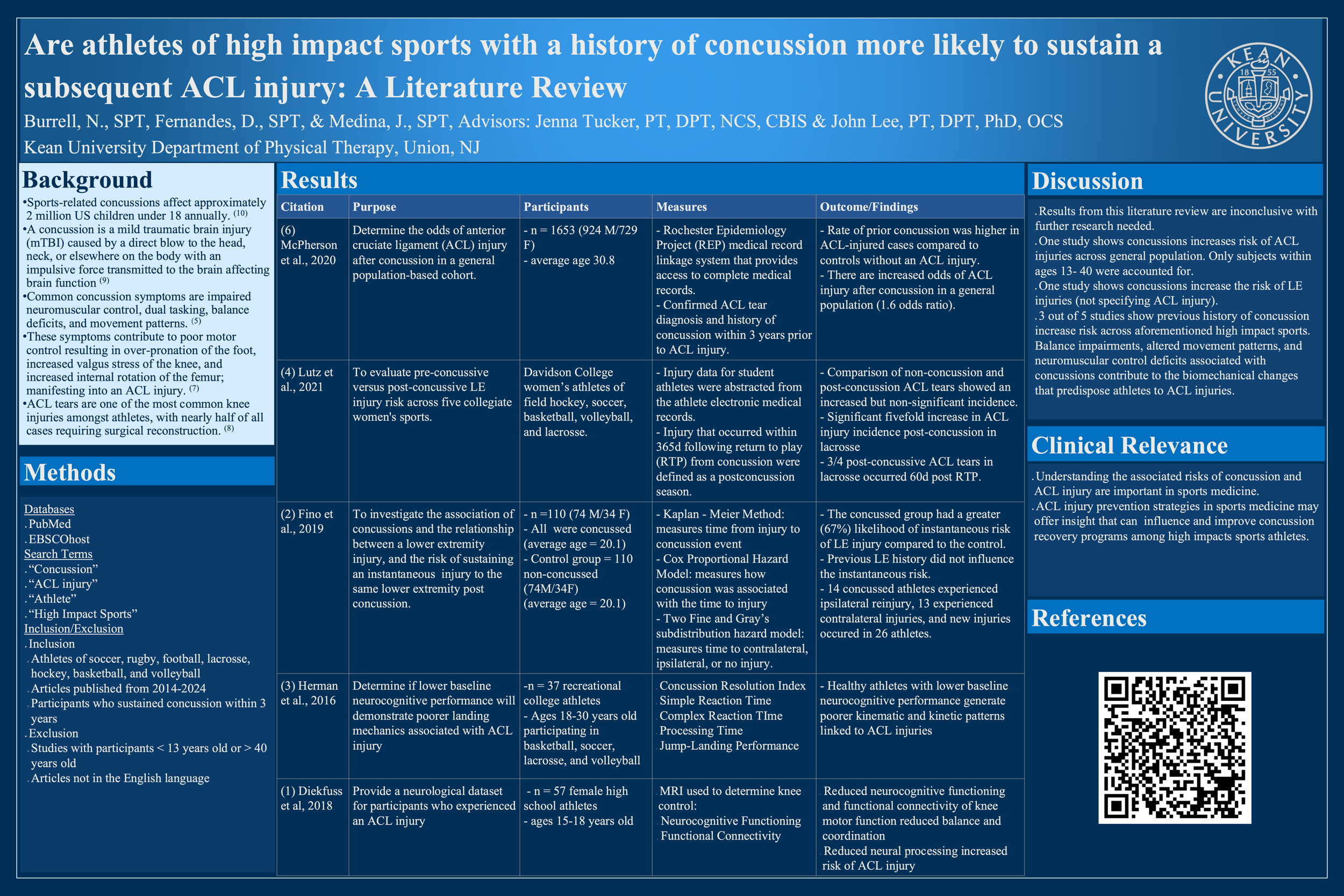
Introduction:Athletes of high impact sports (i.e. soccer, rugby, football, and lacrosse) typically have a high risk of concussions and anterior cruciate ligament (ACL) injuries. Although the mechanisms of each injury and their effects on performance have been studied before, current evidence is proposing a relationship between high-impact sports athletes with concussions and their risk for ACL injuries. Common symptoms of concussion are impaired neuromuscular control, dual tasking, balance deficits, and movement patterns. These symptoms contribute to poor motor control that can put athletes at increased risk for an ACL injury.Purpose:To explore the connection between mild traumatic brain injury effects of a concussion and the biomechanical mechanism of injury of an ACL injury.Subjects:Athletes with concussions between 13-40 years old.Methods:Searches were conducted on two databases: PubMed and EBSCOhost. Articles were selected based on relevance to the research question, methods for conducting the study, and results. Inclusion criteria include athletes of soccer, rugby, football, and lacrosse, articles published from 2014-2024, and participants who sustained concussions no greater than 3 years ago. Exclusion criteria were studies with participants < 13 years old or > 40 years old, and articles not published in English.Conclusion:The findings from synthesizing the current evidence suggest that balance impairments, altered movement patterns, and neuromuscular control deficits from concussions contribute to biomechanical changes that predispose athletes to ACL injuries such as over pronation of the foot, increased valgus stress to the knee, and increased internal rotation of the femur. The main findings disseminated were that concussions and ACL injuries are linked among high impact athletes due to impairments in neurocognitive performance which increase the risk of subsequent ACL injury.Clinical Relevance:Understanding the associated risks of concussion and ACL injuries is crucial for clinicians to implement comprehensive concussion management and rehabilitation, along with early intervention strategies that could help lessen the risk of subsequent ACL injuries in athletes with a history of concussions.
Keywords: ACL injury, Concussion, Athlete, High Impact Sport