
Comparing Outcome Measures of Bridge-Enhanced ACL Restoration to Autograft ACL Reconstruction in Young Athletes: A Systematic Review
Nicole Blackwell
Co-Presenters: Hailey Piemonte, Abigail Ganley, Nathanael Burrell
College: The College of Health Professions and Human Services
Major: Physical Therapy (DPT)
Faculty Research Mentor: Carla Enriquez
Abstract:
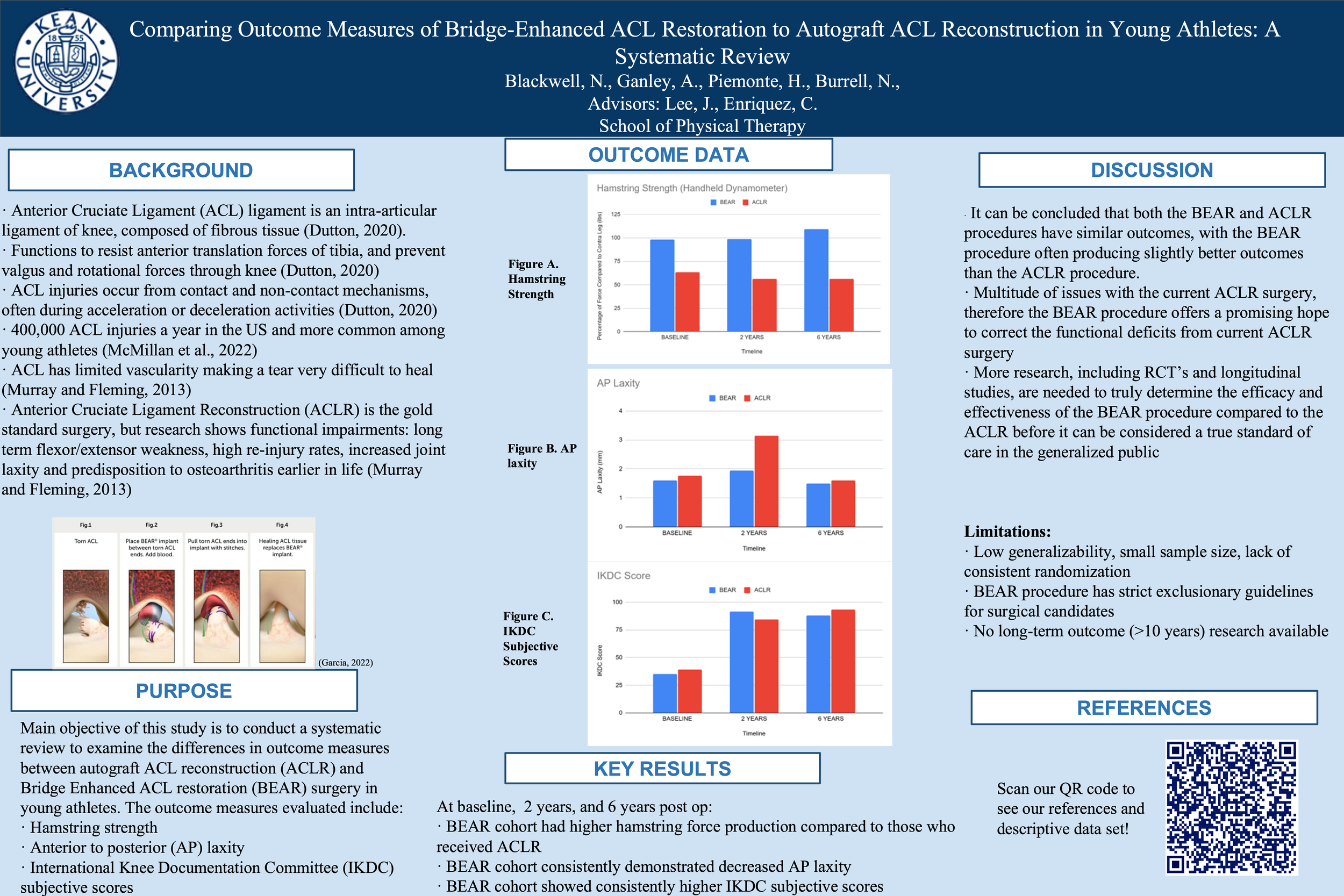
Comparing Outcome Measures of Bridge-Enhanced ACL Restoration to Autograft ACL Reconstruction in Young Athletes: A Systematic ReviewThe main objective of this study is to conduct a systematic review to examine the differences in outcome measures between autograft ACL reconstruction (ACLR) and Bridge Enhanced ACL restoration (BEAR) surgery in young athletes. A systematic review was conducted regarding the available studies comparing BEAR and ACLR outcomes. An electronic search of online databases (PubMed and EBSCOhost) was conducted from March 20th, 2023 to October 30th, 2024. The outcome measures being assessed in this study are hamstring strength, anterior to posterior (AP) laxity, and the International Knee Documentation Committee (IKDC) subjective scores following both procedures. The data was analyzed for emerging patterns in relation to the outcomes selected. The analysis of results indicates comparable results between the BEAR and ACLR procedures at baseline, two years and six years post-surgery. The analysis shows the BEAR and ACLR procedures produce similar outcomes post operatively, with the BEAR procedure producing slightly better outcomes than the ACLR procedure, in particular regarding hamstring strength, AP laxity and IKDC subjective scores. More research, including RCT and longitudinal studies are needed to truly determine the efficacy and effectiveness of the BEAR procedure compared to the ACLR before it can be considered a true standard of care in the generalized public.
Keywords: ACLR, BEAR, hamstring strength, AP laxity, IDKC subjective scores