
mTBI in older adults: symptom patterns, recovery trajectories, and the need for a geriatric-specific care model
Dylan Cumella
Co-Presenters: Eden Schechter, Giana Giorello
College: The College of Health Professions and Human Services
Major: Physical Therapy (DPT)
Faculty Research Mentor: Jenna Tucker
Abstract:
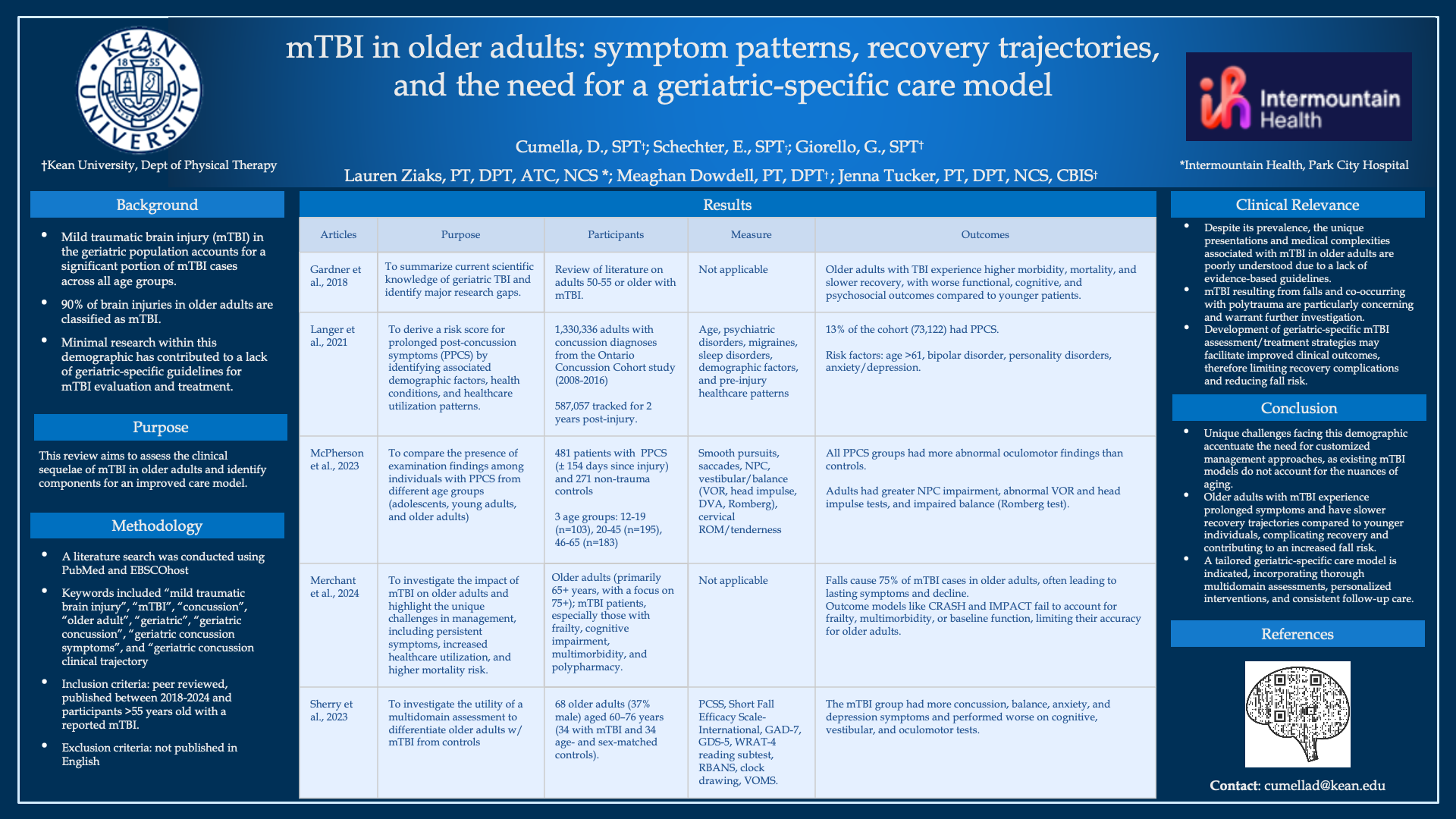
Intro/Background: Mild traumatic brain injury (mTBI) in the geriatric population accounts for a significant portion of mTBI cases across all age groups, and 90% of brain injuries in older adults are classified as mTBI. However, minimal research within this demographic has contributed to a lack of geriatric-specific guidelines for mTBI evaluation and treatment. This review aims to assess the clinical sequelae of mTBI in older adults and identify components for an improved care model.Methods: A literature search was conducted using PubMed and EBSCOhost. Keywords included “mild traumatic brain injury”, “mTBI”, “concussion”, “older adult”, “geriatric”, “geriatric concussion”, “geriatric concussion symptoms”, and “geriatric concussion clinical trajectory.” Inclusion criteria: peer reviewed, published between 2018-2024 and participants >55 years old with a reported mTBI. Exclusion criteria: not published in English.Results: The literature search yielded 7 articles; of these, 5 articles with varying study designs met inclusion criteria. Age has been identified as a significant predictor of prolonged recovery and poorer outcomes, including higher morbidity/mortality rates. Older individuals are more likely to report a greater quantity, intensity, and duration of symptoms following mTBI including cognitive, behavioral, balance, vestibular, and visual deficits. Current models do not account for baseline function, fragility, and comorbidities, highlighting the need for geriatric-specific assessments and individualized treatment plans to promote optimal recovery.Conclusion: Unique challenges facing this demographic accentuate the need for customized management approaches, as existing mTBI models do not account for the nuances of aging. Older adults with mTBI experience prolonged symptoms and have slower recovery trajectories compared to younger individuals, complicating recovery and contributing to an increased fall risk. Therefore, a tailored geriatric-specific care model is indicated, incorporating thorough multidomain assessments, personalized interventions, and consistent follow-up care.Clinical Relevance: Despite its prevalence, the unique presentations and medical complexities associated with mTBI in older adults are poorly understood due to a lack of evidence-based guidelines. mTBI resulting from falls and co-occurring with polytrauma are particularly concerning and warrant further investigation. Development of geriatric-specific mTBI assessment/treatment strategies may facilitate improved clinical outcomes, therefore limiting recovery complications and reducing fall risk.