
Resolution of a Positive Modified Sharp Purser Test In a Patient with Chronic Atraumatic Dizziness: A Case Report
Elisabeth Carter
Co-Presenters: Individual Presentation
College: The College of Health Professions and Human Services
Major: Physical Therapy (DPT)
Faculty Research Mentor: Caitlin Boyko
Abstract:
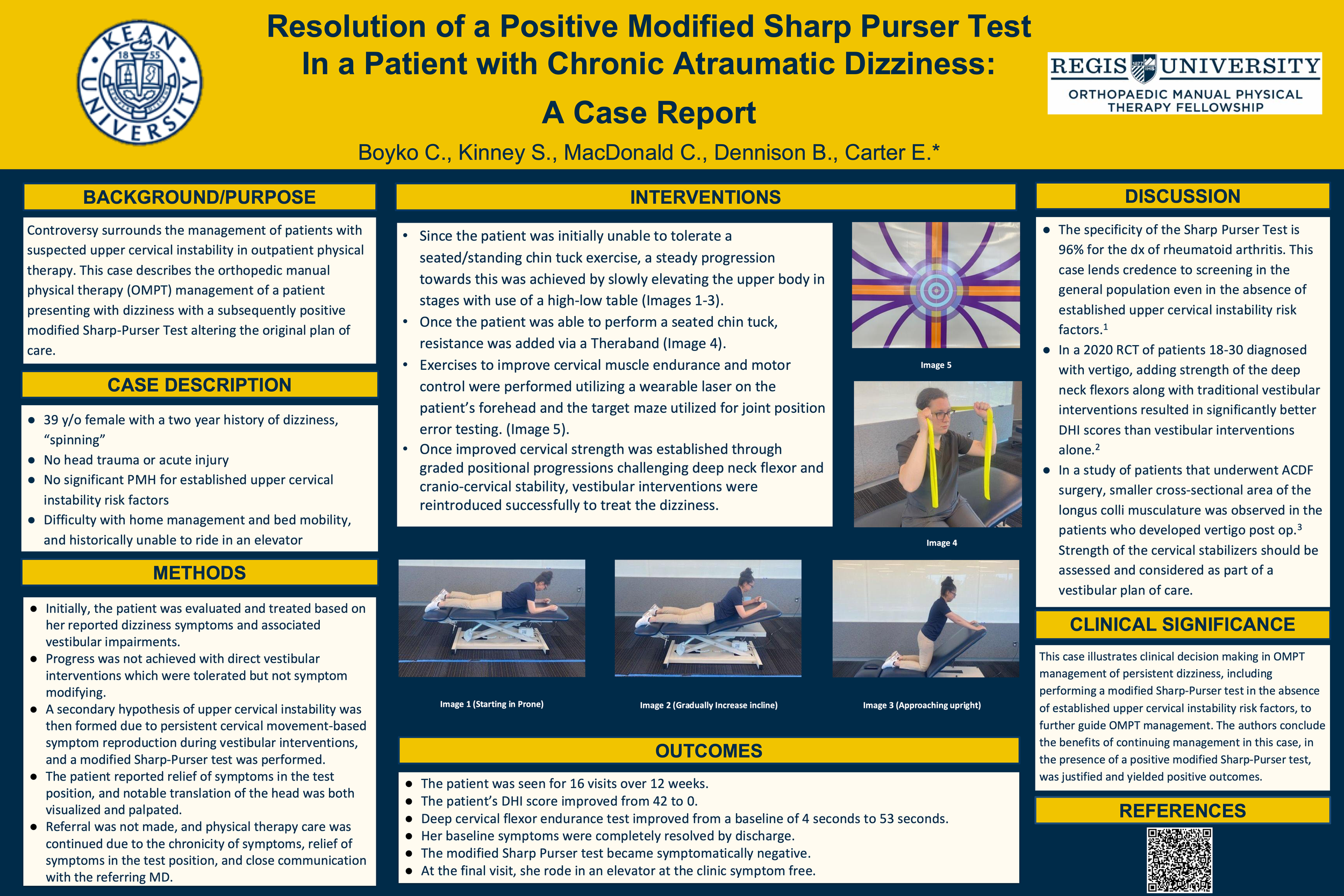
Background: This case describes the orthopedic manual physical therapy (OMPT) management of a patient presenting with dizziness with a subsequently positive modified Sharp-Purser Test altering the original plan of care. Case Description: A 39-year-old female was referred to outpatient physical therapist services with a two-year history of dizziness, “spinning”, and a multi-year history of being unable to ride an elevator. She denied head trauma and acute injury and her past medical history was not significant for known upper cervical instability risk factors. Initially, the patient was evaluated and treated based on her reported dizziness symptoms and associated vestibular impairments. Progress was not achieved with direct vestibular interventions. A secondary hypothesis of upper cervical instability was then formed, and a modified Sharp-Purser test was performed and was positive. Management pivoted to focus on cervical strength. Outcomes: Her baseline symptoms were completely resolved by discharge, and her modified Sharp Purser test was symptomatically negative. At the final visit, she rode in an elevator at the clinic symptom free. Conclusion: The authors conclude the benefits of continuing management in this case, in the presence of a positive modified Sharp-Purser test, was justified and yielded positive outcomes.