
Target’s Potential Profitability in the Long Run
Adrian Bisono
Co-Presenters: Individual Presentation
College: College of Business and Public Management
Major: Finance
Faculty Research Mentor: Andreas Kakolyris
Abstract:
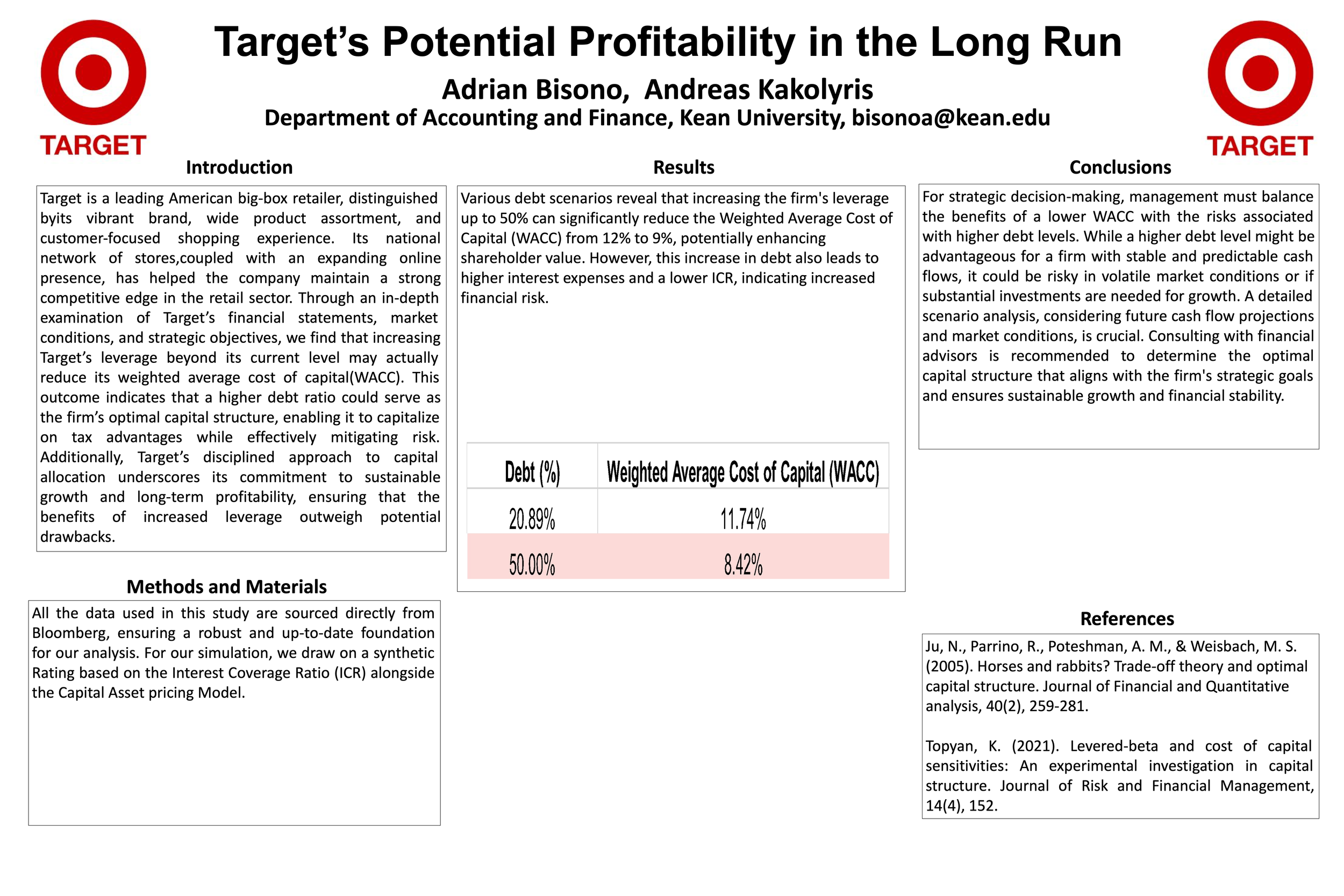
Target is a leading American big-box retailer, distinguished by its vibrant brand, wide product assortment, and customer-focused shopping experience. Its national network of stores, coupled with an expanding online presence, has helped the company maintain a strong competitive edge in the retail sector. Through an in-depth examination of Target’s financial statements, market conditions, and strategic objectives, we find that increasing Target’s leverage beyond its current level may actually reduce its weighted average cost of capital(WACC). This outcome indicates that a higher debt ratio could serve as the firm’s optimal capital structure, enabling it to capitalize on tax advantages while effectively mitigating risk. Additionally, Target’s disciplined approach to capital allocation underscores its commitment to sustainable growth and long-term profitability, ensuring that the benefits of increased leverage outweigh potential drawbacks.