
A Comparison of Biodiversity in Oyster Shell Bags Made with Different Materials
Aracelis Hannah
Co-Presenters: Individual Presentation
College: nan
Major: UN.NON-MATRICULATED
Faculty Research Mentor: Allison Fitzgerald
Abstract:
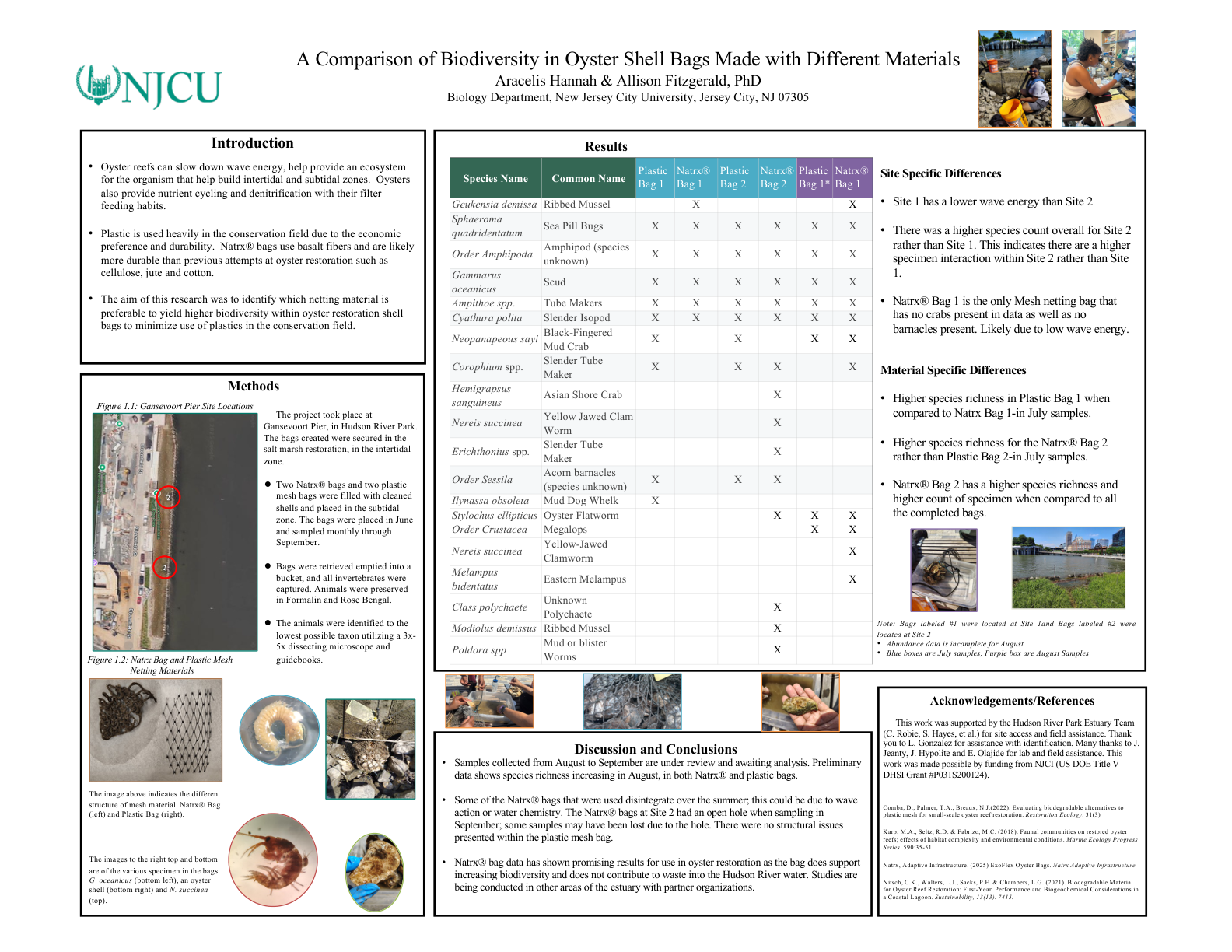
The conservation field commonly uses plastics within their oyster restoration efforts for plastics durability and a beneficial economical choice. It has been noted through multiple that plastic waste has harmful effects on animals that reside on land and within the water. To avoid this, scientists have been observing how different oyster netting materials may provide an environmentally safe approach that will not degrade. Natrx ExoFlex Oyster Bags have been cited to be created from basalt fibers which is naturally occurring have a natural substrate factor to attract infaunal vertebrates to the oyster shells. There were 75 recycled oyster shells that have been placed in a 30-inch shell bag and placed at two sites located within Ganesvoort Pier in Hudson River Pier located in Manhattan, New York,NY. The Natrx bags were prepared by the Hudson River Park team and each bag had 75 adult Oysters Shells. When sampling, the oyster shell bags were separated by site and type of bag into buckets to avoid species . Species were collected at the site in separate jars (by bag and by site) and preserved in formalin to be identified to the lowest taxon using a dissecting microscope and several guidebooks. Natrx bags were then used. Natrx Bag located at site 1 when compared to Plastic Bag found at Site 1 had a lower biodiversity within species and slightly lower number of species present in total than Plastic Bag found in Site 1. Narx bags were tearing from consistent interactions with wave energy prevalent and jagged rocks prevalent.