
Analysis of Illicit Drug Occurrence in Wastewater Treatment Plants in New Jersey
Abigail Castellanos
Co-Presenters: Individual Presentation
College: Hennings College of Science Mathematics and Technology
Major: BS.CHEM/FOREN/SCI
Faculty Research Mentor: Mingjing Sun
Abstract:
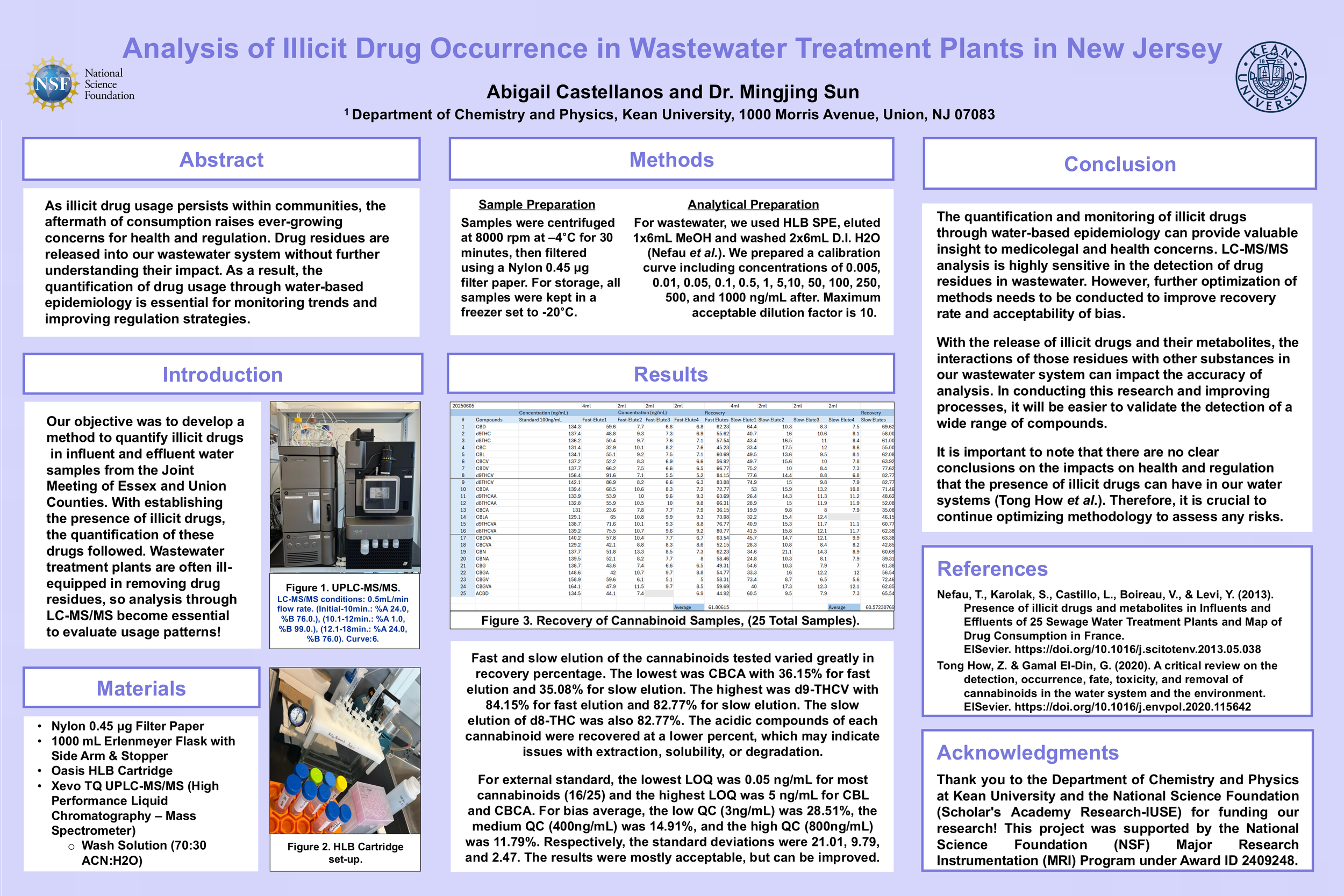
As illicit drug usage persists within communities, the aftermath of consumption raises ever-growing concerns for health and regulation. Drug residues are released into our wastewater system without further understanding their impact. Sensitive methodology has been developed for the detection of specific illicit drugs, but cannabinoids like THC-COOH are often not detected successfully in wastewater samples because of degradation and/or its lipophilic properties. It is crucial to develop a method to accurately quantify the presence of these compounds that adhere to a good recovery rate as these rates greatly vary in literature. Sample treatment prior to LC-MS analysis, such as solid phase extraction (SPE), can impact the recovery and clarity of detection greatly. Due to this, the method for preparation of analysis must be tested alongside LC-MS conditions to verify the reliability of the results and make improvements as needed to reach the target recovery of 100±20%. The quantification of drug usage through water-based epidemiology is essential for monitoring trends and improving regulation strategies.