
Ecolab Inc.: Capital Structure Sensitivity Analysis Using the Synthetic Rating Method
Xin Zhang
Co-Presenters: Individual Presentation
College: College of Business and Public Management
Major: BS.FINANCE
Faculty Research Mentor: Andreas Kakolyris
Abstract:
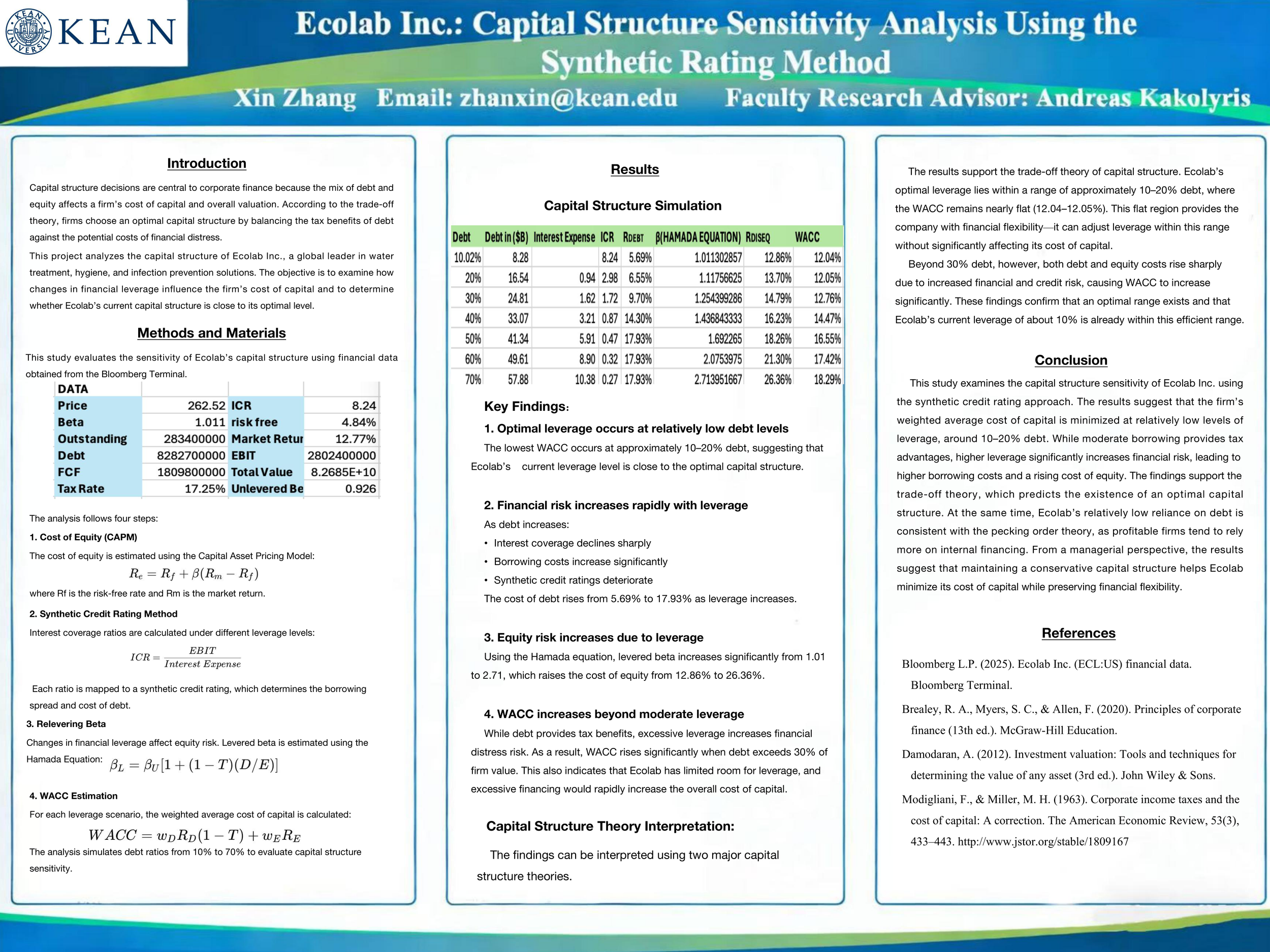
This project examines the optimal capital structure of Ecolab Inc. by analyzing how changes in financial leverage influence the firm’s weighted average cost of capital and overall valuation. The objective is to determine whether Ecolab’s current mix of debt and equity minimizes its cost of capital or if alternative leverage levels could enhance firm value. Ecolab Inc. is a leading U.S.-based provider of water treatment, hygiene, and infection prevention solutions, serving industrial and institutional clients worldwide. Using financial data obtained by using Bloomberg Terminal data, the cost of equity is estimated through the Capital Asset Pricing Model, while the cost of debt is derived through the synthetic rating method based on the firm’s interest coverage ratio. We simulate alternative debt-to-value ratios and recalculate levered beta, projected credit ratings, borrowing spreads, and WACC under each scenario to evaluate capital structure sensitivities. Corporate finance theory suggests that moderate leverage may lower capital costs due to tax benefits, whereas excessive debt increases financial and credit risk. By applying this framework to a large publicly traded U.S. firm, the study contributes to the ongoing discussion of capital structure optimization and its implications for strategic financial decision-making. The findings are presented and analyzed in this poster.