
Effect of a 16-Week Combined Exercise Program on Muscle Performance in a Post-Menopausal Woman with Cardiovascular Disease: A Case Study
Matthew Picone
Co-Presenters: Individual Presentation
College: College of Health Professions and Human Services
Major: MS.EXERCISESCI
Faculty Research Mentor: Pragya Sharma, Adam Eckart
Abstract:
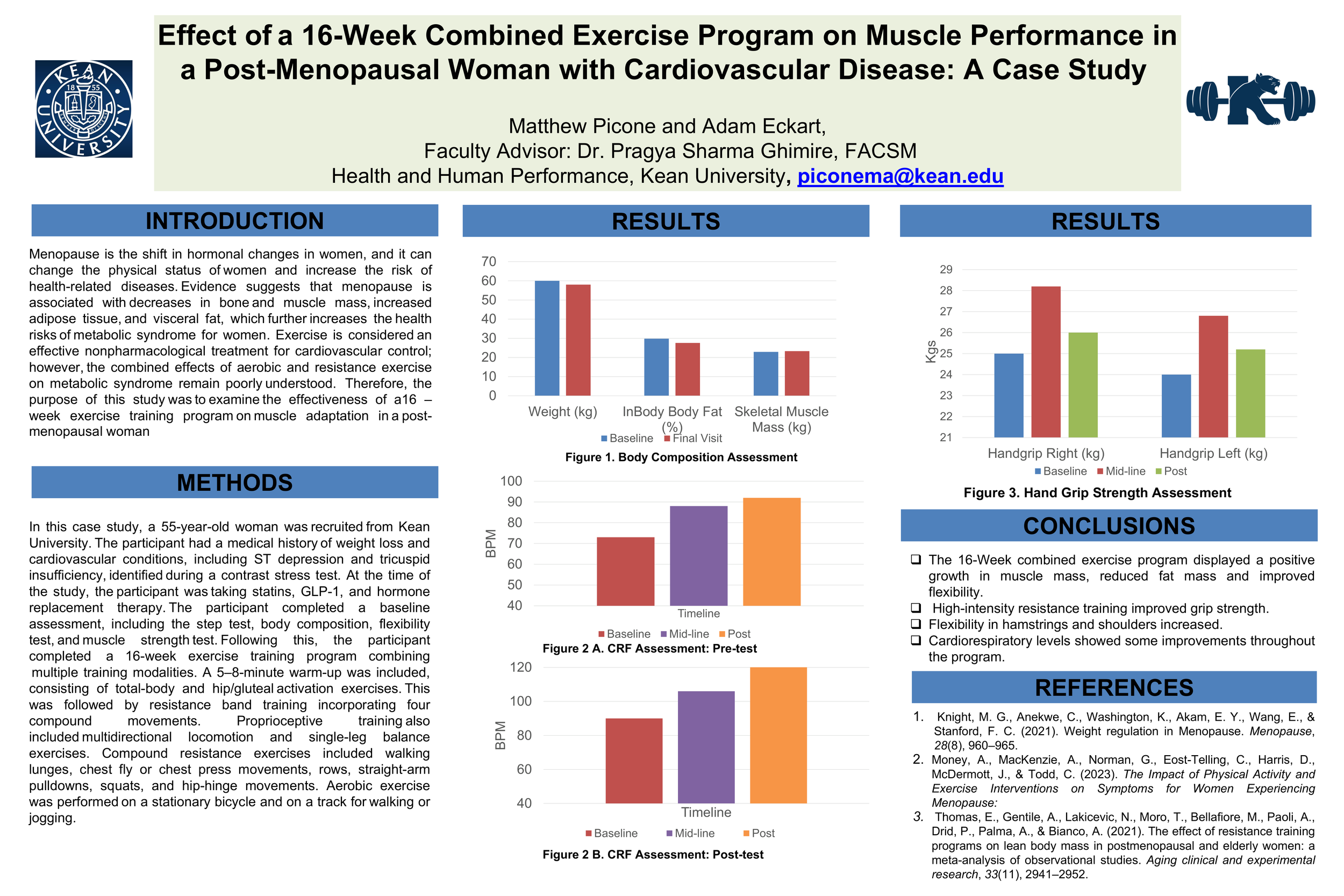
Introduction: Menopause is the shift in hormonal changes in women, and it changes the physical status of women and increases the risk of health-related diseases. Evidence suggests that menopause is associated with decreases in bone and muscle mass, increased adipose tissue, and visceral fat, which further increases the health risks of metabolic syndrome for women. Exercise is considered an effective nonpharmacological treatment for cardiovascular control; however, the combined effects of aerobic and resistance exercise on metabolic syndrome remain poorly understood. Purpose: The purpose of this study was to examine the effectiveness of a16 – week exercise training program on muscle adaptation in a post-menopausal woman. Methods: In this case study, a 55-year-old woman was recruited from Kean University. The participant had a medical history of weight loss and cardiovascular conditions, including ST depression and tricuspid insufficiency, identified during a contrast stress test. At the time of the study, the participant was taking statins, GLP-1, and hormone replacement therapy. The participant completed a baseline assessment, including the step test, body composition, flexibility test, and muscle strength test. Following this, the participant completed a 16-week exercise training program combining multiple training modalities. A 5–8-minute warm-up was included, consisting of total-body, and hip/gluteal activation exercises. This was followed by resistance band training incorporating four compound movements. Proprioceptive training also included multidirectional locomotion and single-leg balance exercises. Compound resistance exercises included walking lunges, chest fly or chest press movements, rows, straight-arm pulldowns, squats, and hip-hinge movements. Aerobic exercise was performed on a stationary bicycle and on a track for walking or jogging. Results: After 16 weeks of training, body fat decreased from 29.8% to 27. 2%. Skeletal muscle mass increased from 22.9 to 23.2 kg. Hand grip strength increased from 24.5 to 27.5 kg. The participant's hamstring range of motion increased from 37.5 to 49 cm. We did not find improvement in cardiorespiratory function. Conclusions: A 16-week multimodal exercise training program significantly improved body composition and muscle performance. However, the lack of cardiorespiratory improvement, given the participant’s history of cardiovascular disease, warrants further investigation.
Key Words: Metabolic Syndrome, Cardiovascular Function, Muscle Performance, and Post-Menopause