
Effect of Whole-Body Electromyostimulation and Body Composition in the General Adult Population: A Narrative Review
Izaiah Guthridge
Co-Presenters: Individual Presentation
College: College of Health Professions and Human Services
Major: MS.EXERCISESCI
Faculty Research Mentor: Pragya Sharma, Adam Eckart
Abstract:
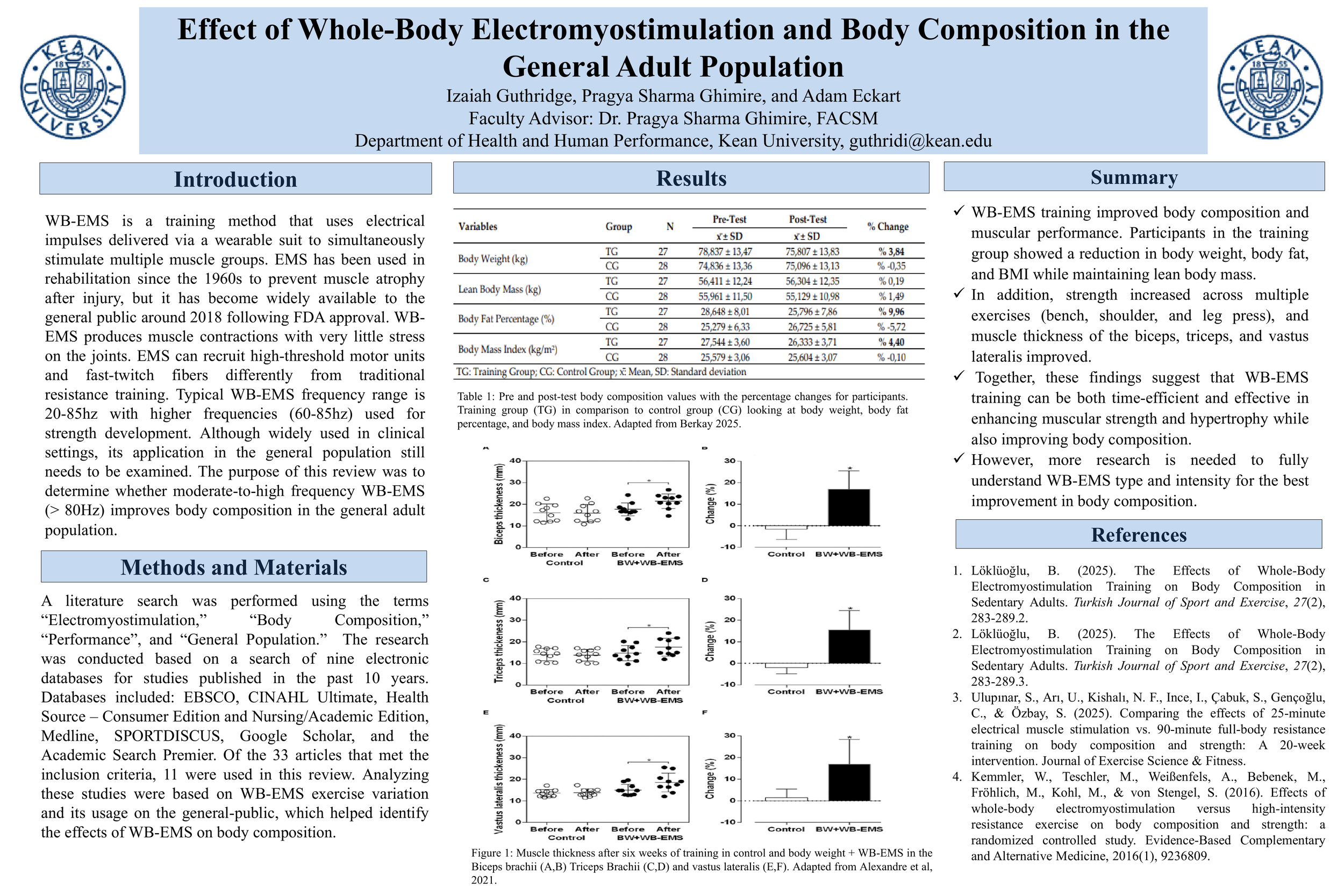
Introduction: Evidence suggests that whole-body electromyostimulation (EMS) is widely used in rehabilitation and clinical settings. EMS uses a wearable suit and is a high-intensity training method that delivers electrical impulses to simultaneously stimulate all major muscle groups. Typical strength-focused EMS sessions use electrical stimulation with a frequency between 50 and 85Hz and a pulse width up to 350 μs. EMS sessions typically use electrical stimulation lasting 15-20 minutes and are considered safe for people of various fitness levels. EMS activates deep muscle fibers, helping build strength and lean muscle mass. Despite its popularity in the early 2000s in Europe, it was not made available to the general public in the United States until early 2018-19, after FDA approval. Although widely used in clinical settings, its application in the general population still needs to be examined. Purpose: The purpose of this review is to determine whether EMS has a positive effect on body composition in the general population of adults. Methods: In this narrative review, we searched nine electronic databases for studies published in the past 10 years. Databases included: EBSCO, CINAHL Ultimate, Health Source – Consumer Edition and Nursing/Academic Edition, Medline, SPORTDISCUS, Google Scholar, and the Academic Search Premier. Of the 33 articles that met the inclusion criteria, 11 were used. Results: We found that EMS may be an effective, time-efficient exercise strategy that reduces body fat and BMI and increases lean muscle mass. EMS training at least twice a week was associated with decreased body weight, higher effort during exercise, and improved strength performance on exercises such as bench press, shoulder press, leg press, and biceps curl. Yet most studies indicate that more research is needed to build strong evidence for practical application. Conclusions: This study showed that EMS elicits meaningful improvements in body composition variables, despite interindividual variability in stimulation frequencies. Moreover, given the substantial time constraints that limit participation in conventional exercise for many individuals, EMS may represent a practical and effective alternative for improving health outcomes in the general population.
Key Words: Electromyostimulation, Body composition, Performance