
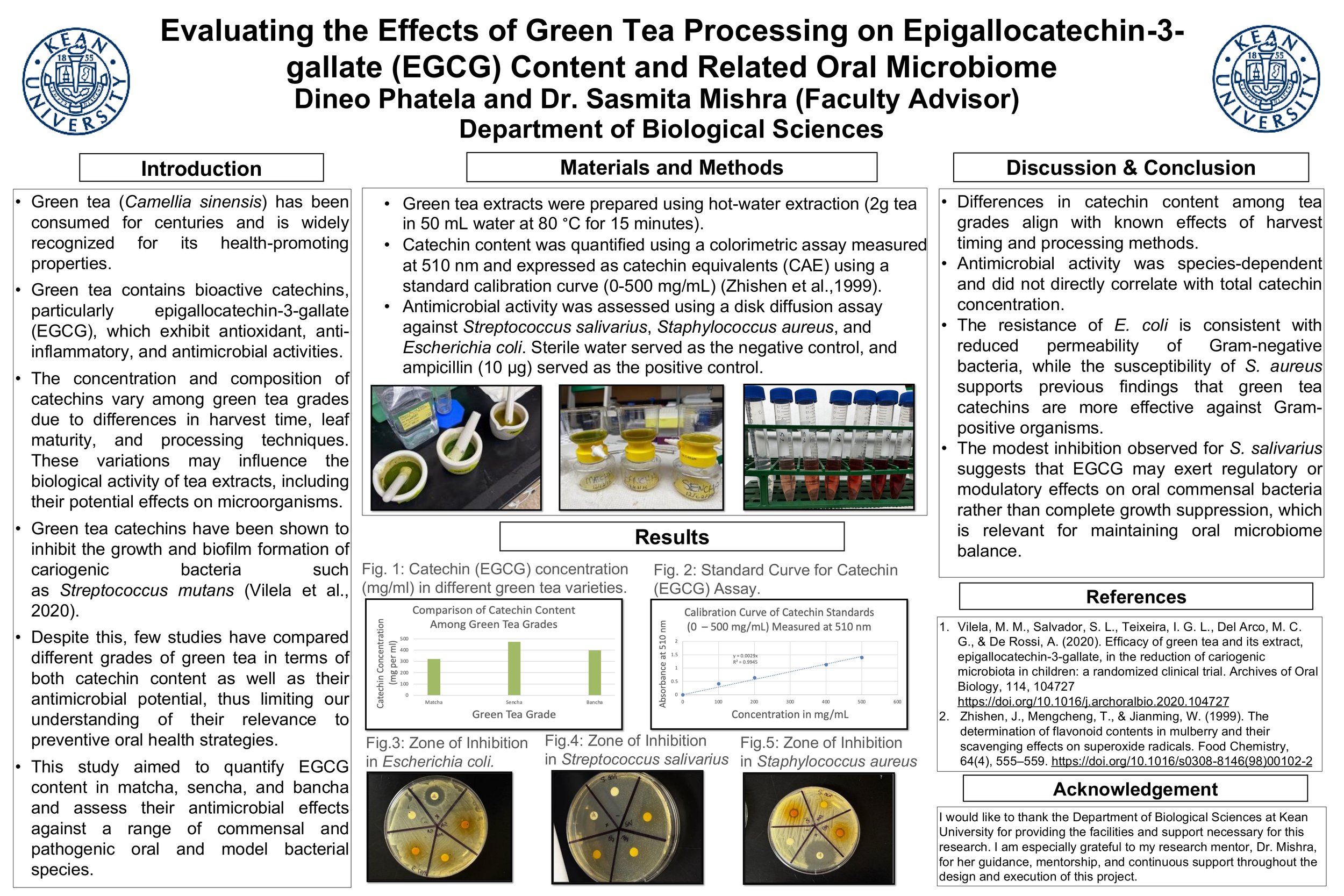
Evaluating the Effects of Green Tea Processing on Epigallocatechin-3- gallate (EGCG) Content and Related Oral Microbiome
Dineo Phatela
Co-Presenters: Individual Presentation
College: Hennings College of Science Mathematics and Technology
Major: BS.BIO/CELL/MOLEC
Faculty Research Mentor: Sasmita Mishra
Abstract:
Dental caries (cavities) is one of the most prevalent chronic conditions around the world today, especially affecting communities where access to preventative care is hard to reach due to distance, cost, or availability of oral healthcare providers. Tea (Camellia sinensis), more commonly known as green tea, is enriched with bioactive catechins, such as epigallocatechin-3-gallate (EGCG), which possess naturally occurring antioxidant and antimicrobial properties relevant to maintaining good oral health. This study investigated the influence of green tea grade processing techniques on catechin (EGCG) content and evaluated their antimicrobial effects on cariogenic (disease-causing) and commensal (non-disease-causing) bacterial species commonly associated with the oral microbiome. Matcha, Sencha, and Bancha green tea samples were extracted using a standardized hot-water extraction method (1:50 w/v, 80 °C). The catechin content in each tea was quantified using a colorimetric assay method, with absorbance measured at 510 nm using a spectrophotometer and expressed as catechin equivalents. The antimicrobial properties of each green tea variety were measured using an agar disk diffusion assay against Staphylococcus aureus, Streptococcus salivarius, and Escherichia coli. Our study found significant differences in catechin concentration among the tea varieties, with Sencha exhibiting the highest EGCG content (472 mg/mL), followed by Bancha (397 mg/mL) and then Matcha (320 mg/mL). Moreover, the antimicrobial effects seen in these assays were dependent on the bacterial species used. No inhibitory activity was observed against E. coli, while clear zones of inhibition were detected for S. aureus, particularly with Sencha and Bancha extracts. The findings from this study indicate that catechin members, such as EGCG, may contribute to improving oral health by selectively inhibiting pathogenic (disease-causing) bacteria while preserving commensal species that have a beneficial role in regulating the oral microbial balance. Additionally, the study highlighted the potential role of green tea-derived compounds, such as EGCG, as affordable, plant-based alternatives in the field of preventive dentistry, to better serve clinically under-resourced communities.
Keywords: Green tea, EGCG, catechins, antimicrobial activity, oral health