
Finding Ecolab’s Optimal Capital Structure
Boyuan Xue
Co-Presenters: Individual Presentation
College: College of Business and Public Management
Major: BS.ACCOUNTING
Faculty Research Mentor: Andreas Kakolyris
Abstract:
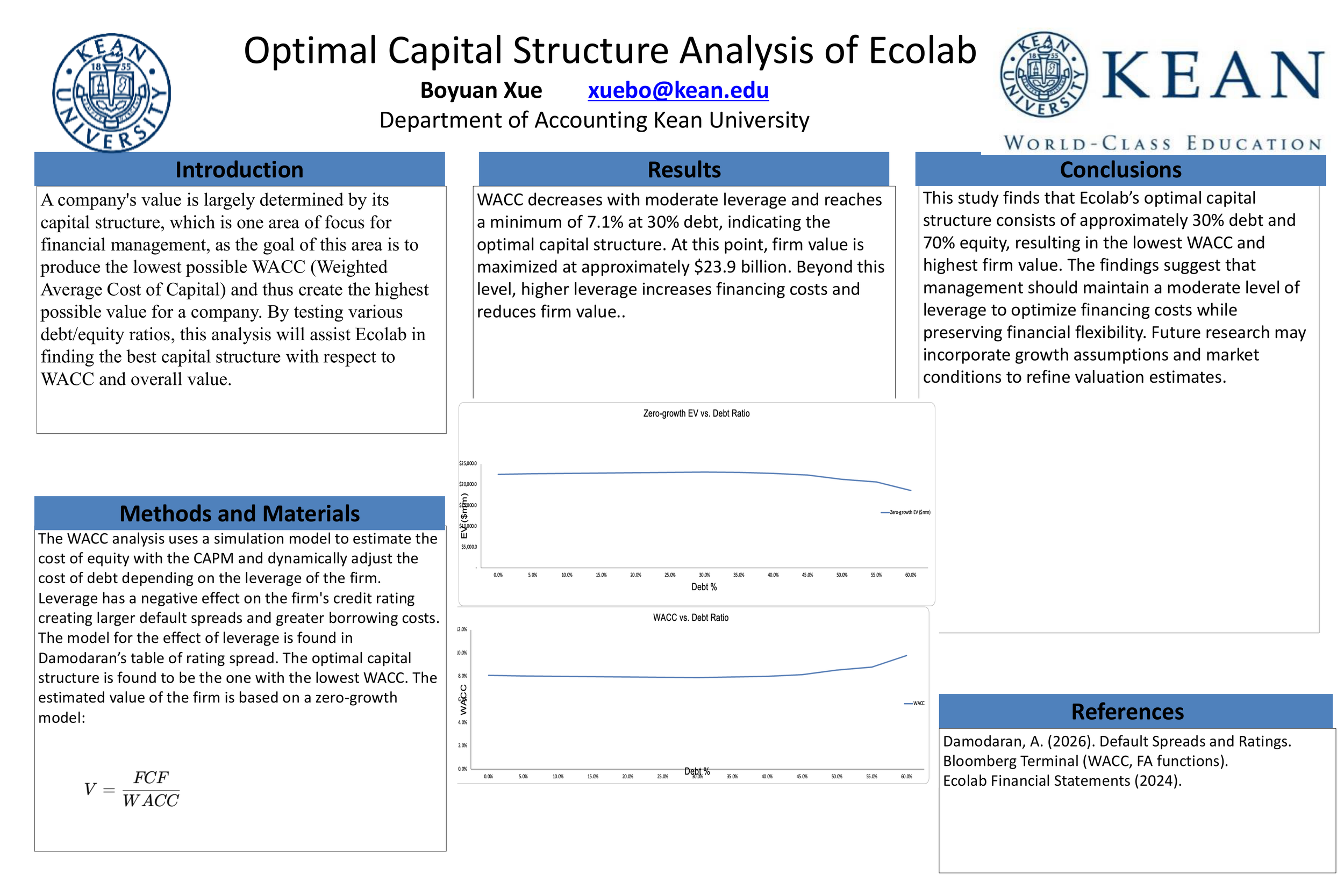
This research assesses Ecolab's choices for capital structure through modeling the potential effect of various levels of debt on Ecolab's weighted average cost of capital (WACC), and thus the value of the company. Ecolab is a sustainability-oriented U.S. based company that provides water, hygiene and infection prevention solutions and services, with its global headquarters located in St. Paul MN. The way I will proceed with conducting the research is to follow a typical corporate finance procedure that involves: (1) developing an estimate of Ecolab's base cost of equity and un-levered risk; (2) re-lever beta for different hypothetical debt-to-capital ratios to reflect the shift in risk from the equity holders to the debt holders; and (3) developing cost of debt estimates for each of the levels of leverage using an estimate of the synthetic rating based upon interest coverage ratios and a review of the ratings assigned by rating agencies. After developing a WACC for each of the levels of leverage, I will also develop an estimate of the leverage level where WACC is at a minimum and where valuations are most likely to be supported. I expect that my findings will demonstrate that moderate levels of leverage will result in a reduced WACC due to the tax benefits of debt but once the threshold of optimum leverage is exceeded the costs of equity rise substantially, as do the credit spreads, resulting in either a flattening or an inversion of the benefit from leverage. The final poster will include information regarding the sensitivities of WACC and will provide some discussion regarding the implications for economic policies.