
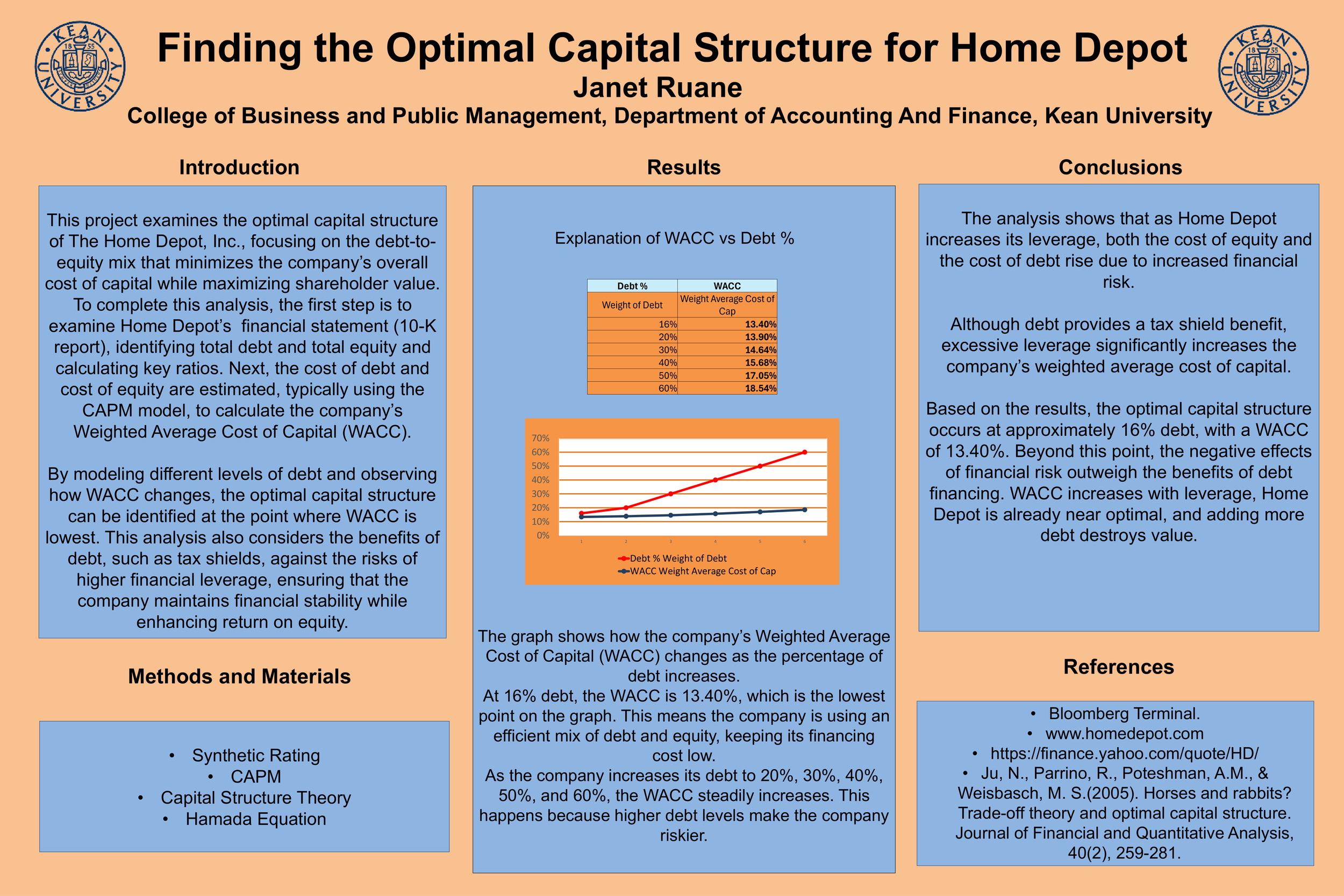
Finding the Optimal Capital Structure for Home Depot
JANET RUANE
Co-Presenters: Individual Presentation
College: College of Business and Public Management
Major: BS.ACCOUNTING
Faculty Research Mentor: Andreas Kakolyris
Abstract:
This project examines the optimal capital structure of The Home Depot, Inc., focusing on the debt-to-equity mix that minimizes the company’s overall cost of capital while maximizing shareholder value. To complete this analysis, the first step is to examine Home Depot’s current financial position using its most recent 10-K report, identifying total debt and total equity and calculating key ratios such as the debt-to-equity ratio. Next, the cost of debt and cost of equity are estimated, typically using the CAPM model, to calculate the company’s Weighted Average Cost of Capital (WACC). By modeling different levels of debt and observing how WACC changes, the optimal capital structure can be identified at the point where WACC is lowest. This analysis also considers the benefits of debt, such as tax shields, against the risks of higher financial leverage, ensuring that the company maintains financial stability while enhancing return on equity.