
Finding the Optimal Capital Structure:Evidence from Exxon Mobil Corporation
Chengze Xue
Co-Presenters: Individual Presentation
College: College of Business and Public Management
Major: BS.FINANCE
Faculty Research Mentor: Andreas Kakolyris
Abstract:
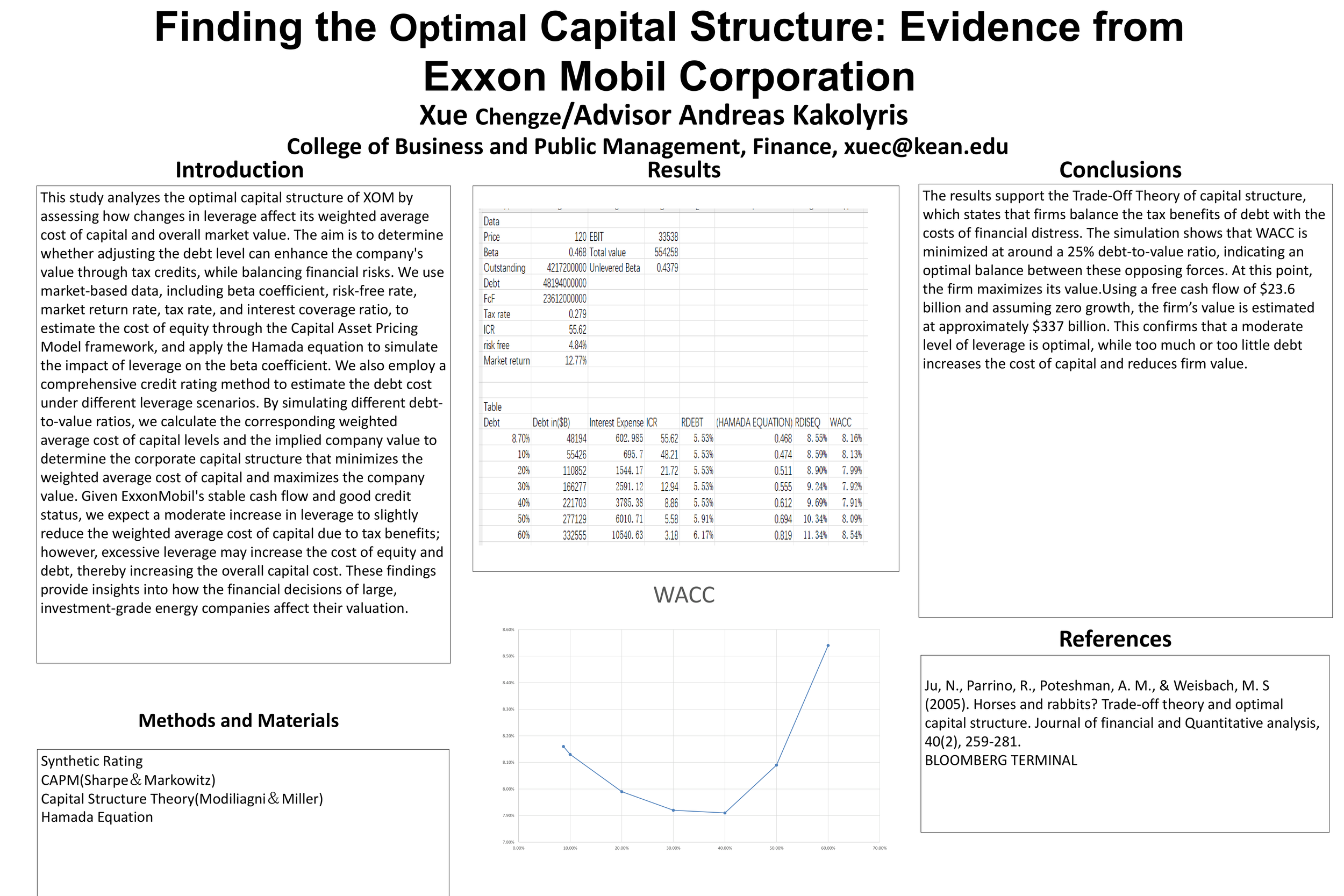
This study analyzes the optimal capital structure of XOM by assessing how changes in leverage affect its weighted average cost of capital and overall market value. The aim is to determine whether adjusting the debt level can enhance the company's value through tax credits, while balancing financial risks. We use market-based data, including beta coefficient, risk-free rate, market return rate, tax rate, and interest coverage ratio, to estimate the cost of equity through the Capital Asset Pricing Model framework, and apply the Hamada equation to simulate the impact of leverage on the beta coefficient. We also employ a comprehensive credit rating method to estimate the debt cost under different leverage scenarios. By simulating different debt-to-value ratios, we calculate the corresponding weighted average cost of capital levels and the implied company value to determine the corporate capital structure that minimizes the weighted average cost of capital and maximizes the company value. Given ExxonMobil's stable cash flow and good credit status, we expect a moderate increase in leverage to slightly reduce the weighted average cost of capital due to tax benefits; however, excessive leverage may increase the cost of equity and debt, thereby increasing the overall capital cost. These findings provide insights into how the financial decisions of large, investment-grade energy companies affect their valuation.