
FTC Against RagingBull: Threats of False Marketing
Andrew Curry
Co-Presenters: Emily Collado, Scott Dubuisson, Alexandre Eluterio, Matthew Donovan, Alexandra Dominguez
College: College of Business and Public Management
Major: BS.MANAGEMNT-SUPPLYCHAINMGT
Faculty Research Mentor: Dawn Adams-Harmon
Abstract:
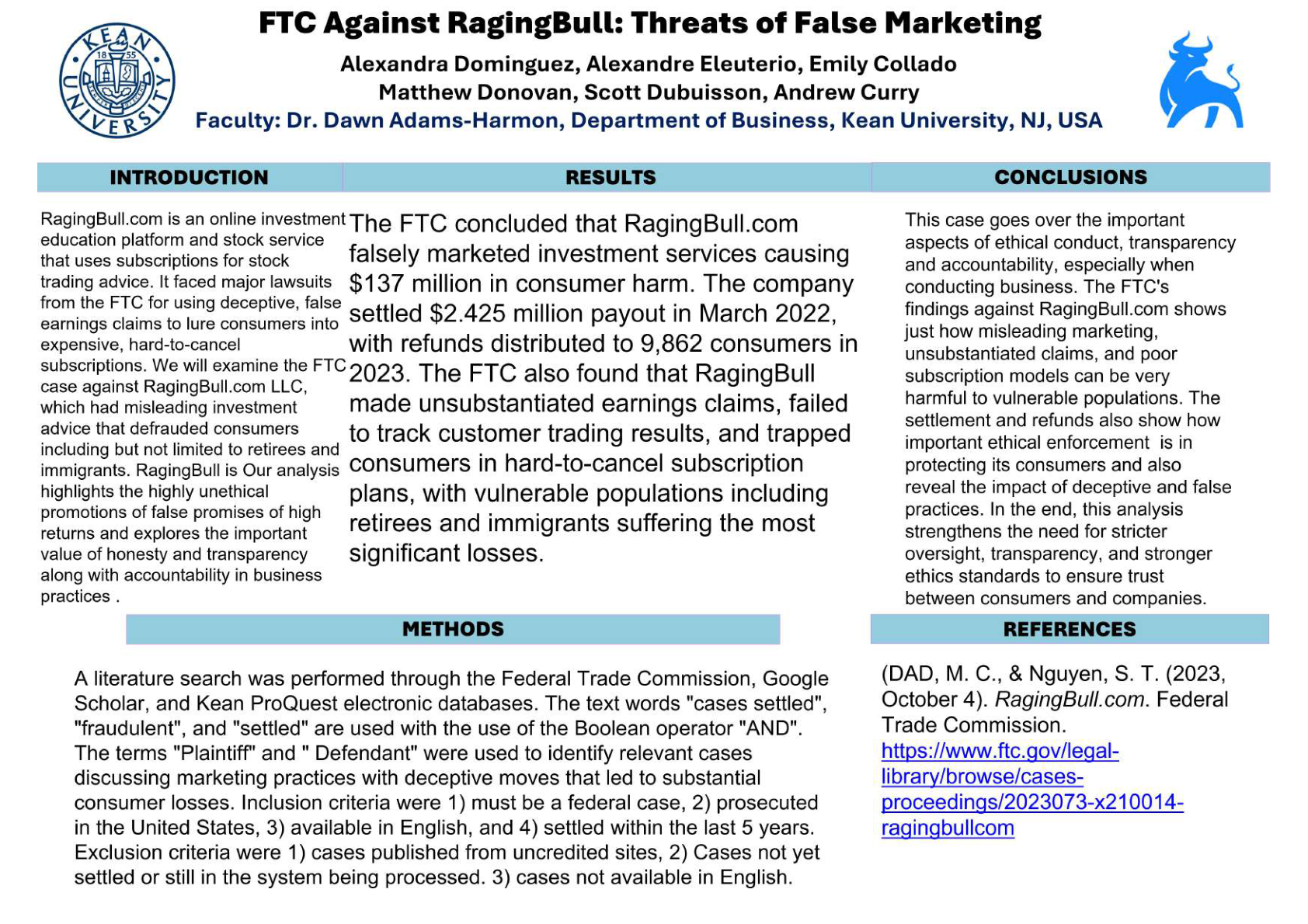
Case Abstract:This research examines the Federal Trade Commission’s (FTC) case against Ragingbull.com and its affiliated entities which were accused of using unlawful and deceptive marketing techniques to sell online investment training and services. RagingBull promoted its services claiming customers could make consistent profits and "beat the market" while simultaneously often targeting inexperienced consumers. The purpose of this study is to analyze how RagingBull’s practices misled and conned consumers which resulted in significant financial harm. The study hypothesizes that the company's promise of high returns with low risk was materially deceptive and likewise caused substantial losses of the consumers. This investigation is based on a review of FTC complaints, settlement documents, and public reports where the company's advertising claims and testimonies were reviewed. The FTC concluded that Ragingbull.com falsely marketed investment services by guaranteeing consistent profits while downplaying risk, which caused significant monetary losses through costly courses and subscription models. The case demonstrates the broader implications of deceptive financial marketing and underscores the importance of regulatory oversight, consumer protection, and transparency within the online investment industry.