
Less is More: Probation and Recidivism
Jessica Longobardi
Co-Presenters: Daneiry De Leon, Raquel Aguilar Cruz, Heather Lawrence
College: College of Liberal Arts
Major: BA.HISTORY/PRE-LAW
Faculty Research Mentor: Dennis Bogdan
Abstract:
Less is More: Probation and Recidivism
Why do longer probation sentences fail in reducing recidivism?
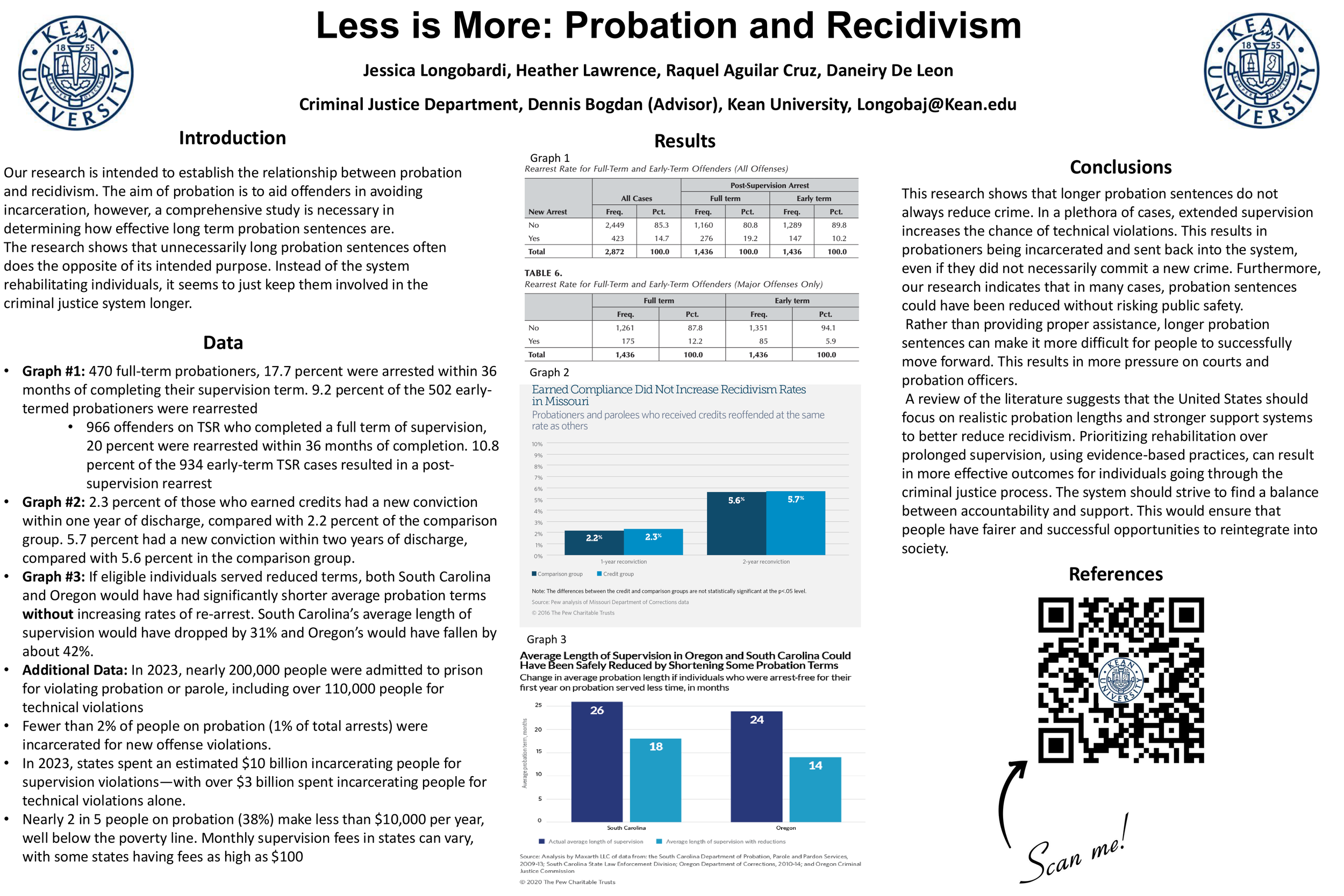
The goal of our research is to establish the relationship between probation and recidivism. The aim of probation is to aid offenders in avoiding incarceration, however, research shows that unnecessarily long probation sentences often does the opposite. Instead of the system rehabilitating individuals, it seems to just keep them involved in the criminal justice system longer. This results in more pressure on courts and probation officers.
This study looks at existing research, criminal justice reports, and policy information to understand how longer probation sentences affect recidivism in New Jersey. By using key techniques, including reviewing academics, analyzing New Jersey probation and releasing recidivism data, and examining criminal justice policy report.
This research show that longer probation does not always reduce crime. In many cases, extended supervision increases the chance of technical violations which can send people back into the system even if they did not commit a new crime. Instead of helping, longer probation can make it harder for people to successfully move forward. This research suggests that New Jersey should focus on realistic probation lengths and stronger support systems to better reduce recidivism.