
salt talk
Rigoberto Montesino Jr.
Co-Presenters: Individual Presentation
College: Michael Graves College
Major: BFA.GRAPHICDESIGN
Faculty Research Mentor: Denise Anderson
Abstract:
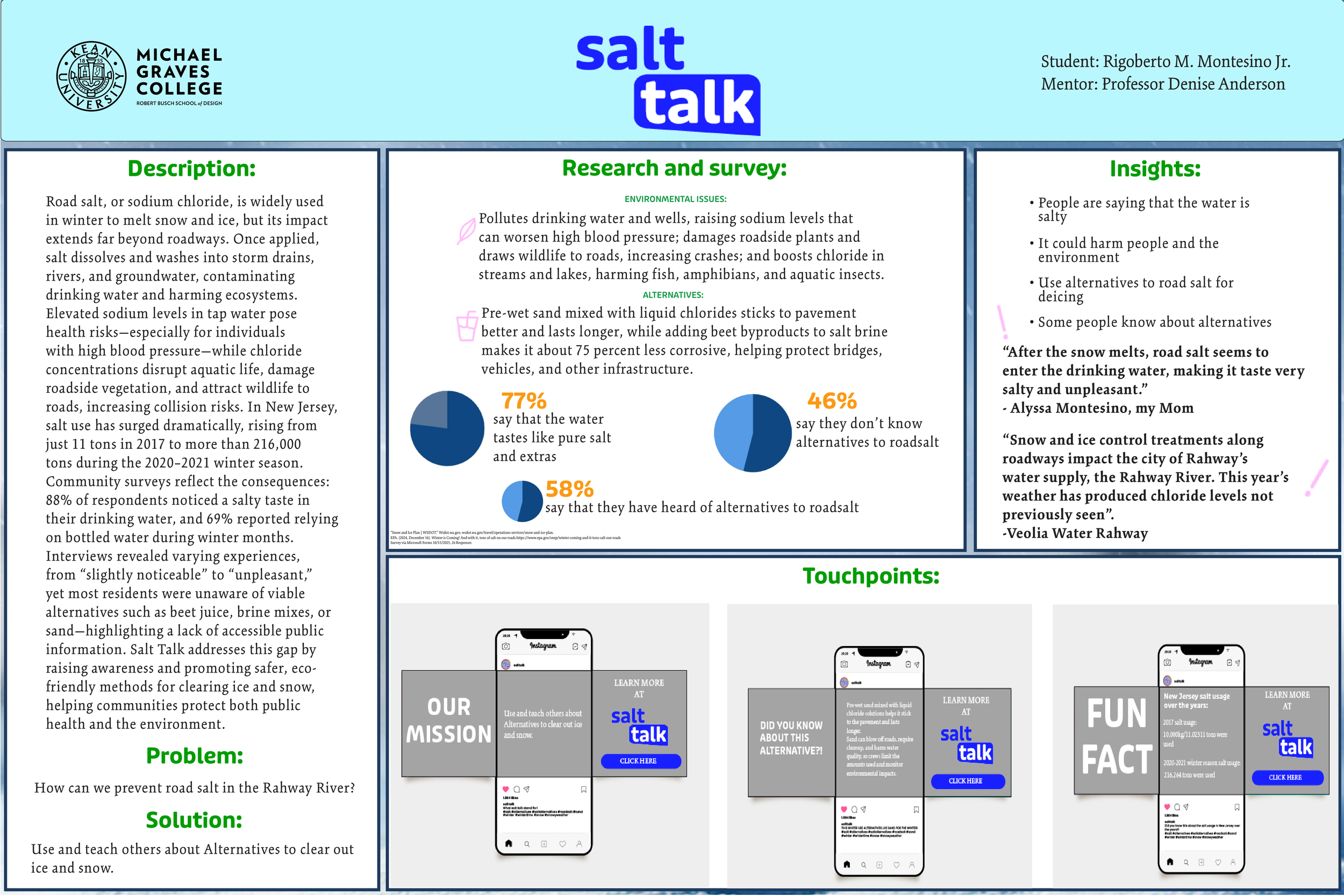
Road salt, or sodium chloride, is widely used in winter to melt snow and ice, but its impact extends far beyond roadways. Once applied, salt dissolves and washes into storm drains, rivers, and groundwater, contaminating drinking water and harming ecosystems. Elevated sodium levels in tap water pose health risks—especially for individuals with high blood pressure—while chloride concentrations disrupt aquatic life, damage roadside vegetation, and attract wildlife to roads, increasing collision risks. In New Jersey, salt use has surged dramatically, rising from just 11 tons in 2017 to more than 216,000 tons during the 2020–2021 winter season. Community surveys reflect the consequences: 88% of respondents noticed a salty taste in their drinking water, and 69% reported relying on bottled water during winter months. Interviews revealed varying experiences, from “slightly noticeable” to “unpleasant,” yet most residents were unaware of viable alternatives such as beet juice, brine mixes, or sand—highlighting a lack of accessible public information. Salt Talk addresses this gap by raising awareness and promoting safer, eco-friendly methods for clearing ice and snow, helping communities protect both public health and the environment.