
The Effect of Shared and Individual Creative Art on Psychological Well-being
Julia Morgan
Co-Presenters: Individual Presentation
College: College of Liberal Arts
Major: BA.PSYCHOLOGY
Faculty Research Mentor: Jane O'Brien
Abstract:
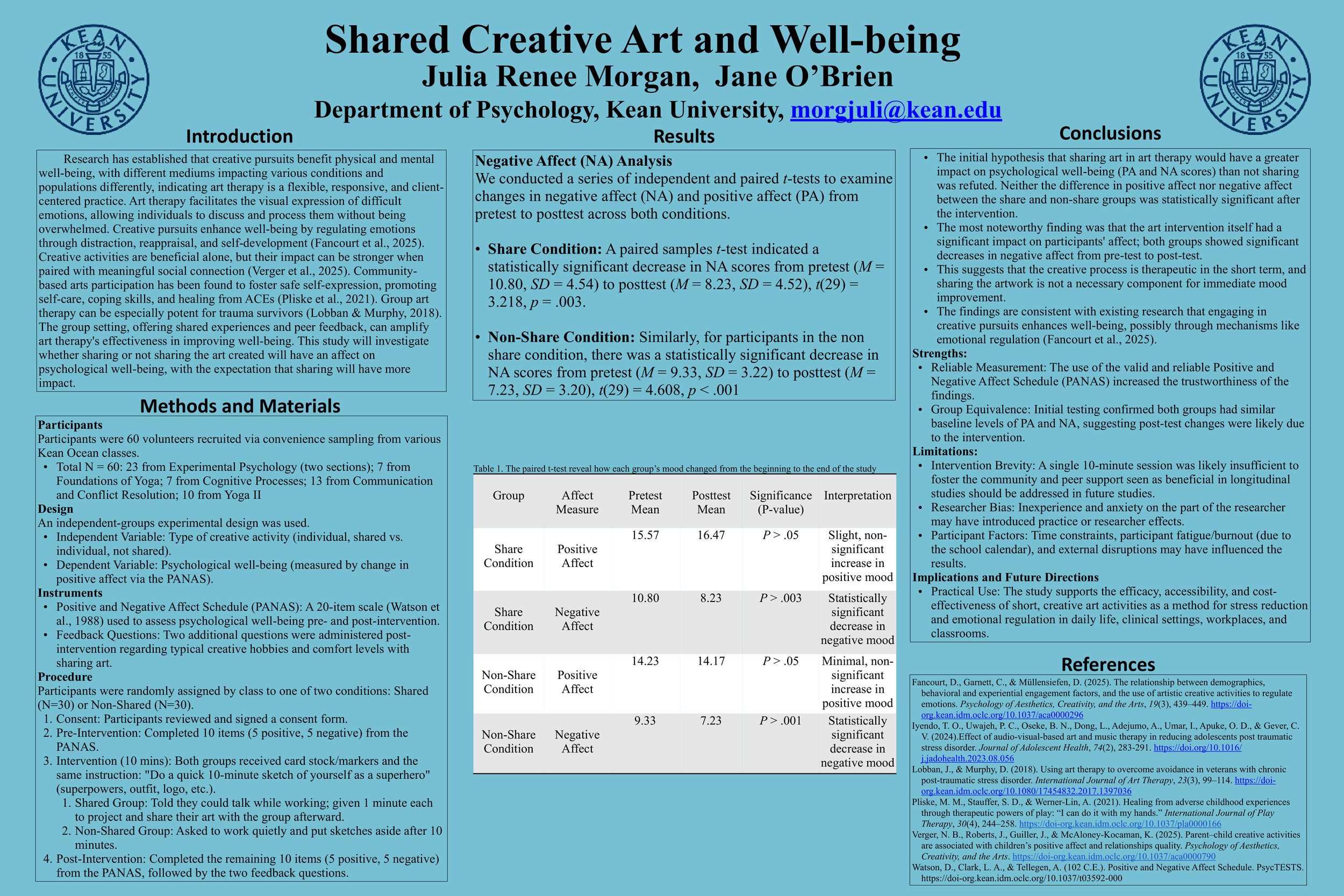
Research has established the beneficial influence of a range of creative expression pursuits on overall happiness, life satisfaction, physical and mental health. A wide variety of art mediums have demonstrated impacts on various conditions and diverse populations, indicating that art therapy is extremely flexible, responsive, and client centered. Individualized art therapy offers privacy, personalized attention, in-depth exploration, and allows the patients to progress at their own pace. Group therapy offers peer support, reduced isolation, alternative perspectives, and often lower costs. The present study investigates whether sharing, or not sharing, art created in therapy sessions has more impact on psychological well-being. Participants (N = 60) completed self-reports for both positive (PA) and negative affect (NA) before completing a drawing prompt focused on positive self image. After the intervention, the share condition group (N = 30) shared the art created with their group, the non-share condition group (N = 30) did not. Then both groups completed self-reports for positive and negative affect. While negative affect scores for both groups decreased significantly over time, the share versus non-share aspect of the intervention never significantly altered the difference in either positive or negative affect between the groups. The results suggest that engaging in even very brief art activities significantly reduces negative affect across groups. However, sharing the art does not enhance psychological well-being compared to not sharing. This has broad implications for public health, clinical treatment, the workplace, schools, and daily emotional regulation because it is quick, effective, accessible, cost effective, and does not require artistic skill.