
The Role of Trauma Informed Design in Healing
Katia Olhovsky
Co-Presenters: Individual Presentation
College: Michael Graves College
Major: BFA.INTDESIGN
Faculty Research Mentor: Lydia Kaplan, Sahand Abbasi
Abstract:
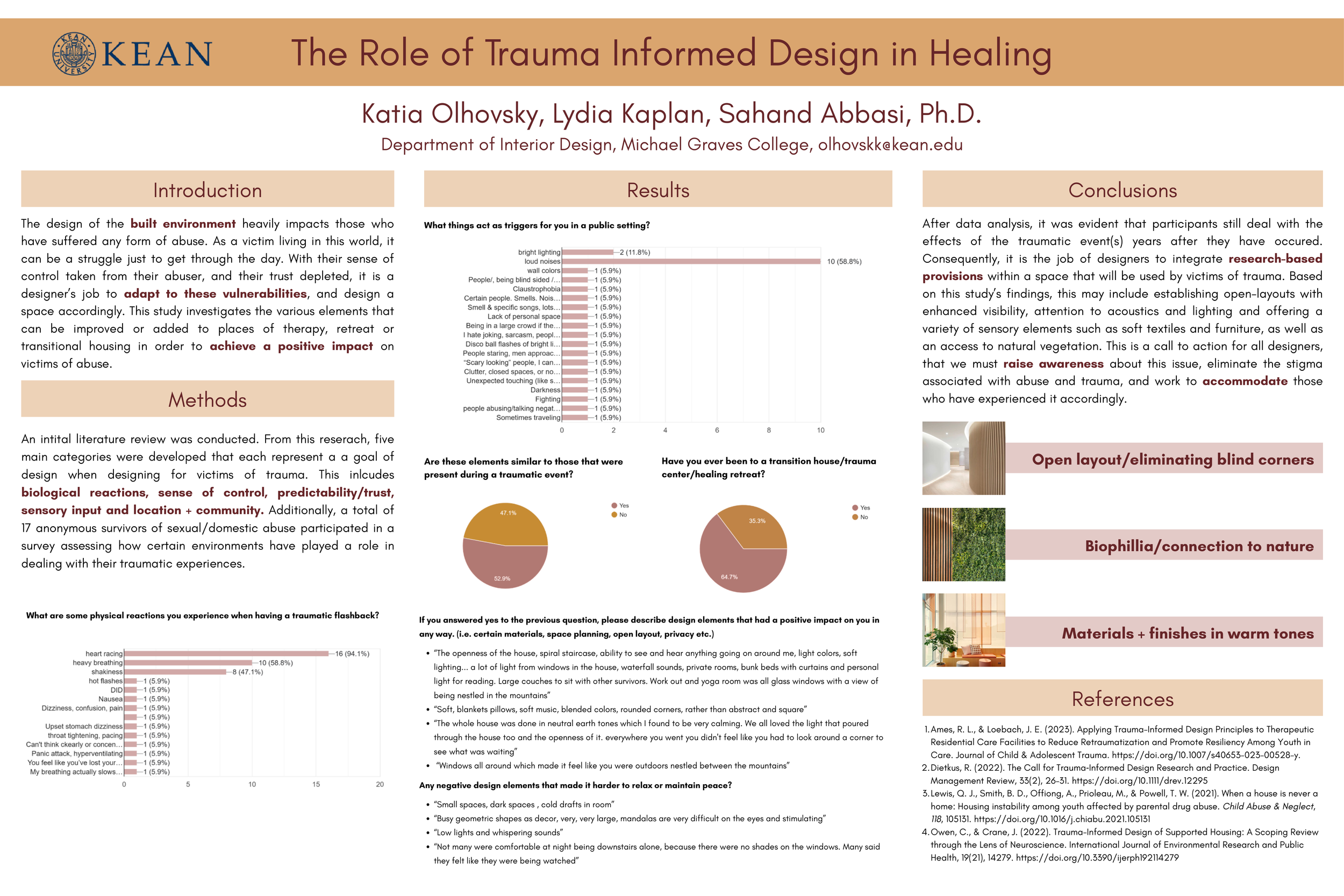
This study aims to better understand how the design of the built environment affects individuals who have experienced traumatic abuse. Designers must recognize the unique vulnerabilities that survivors often live with and shape spaces that accommodate their emotional and physical needs. This research investigates the various physical design elements that can be improved or added to in places such as therapy centers, retreats, or transitional housing in order to create positive and supportive spaces for victims of abuse.
A total of 16 anonymous survivors of sexual/domestic abuse participated in a survey assessing how certain environments have influenced their ability to cope with trauma. The survey collected a variety of qualitative descriptions of their experience, including physical or emotional reactions triggered by specific environmental conditions. Participants also identified physical design features in public settings associated with negative internal feedback. The results suggest that loud noise, harsh lighting, and small, enclosed spaces frequently act as environmental triggers for victims. With half of participants reporting a PTSD diagnosis, many of these environmental factors were present at the time of the original traumatic event.
These findings indicate that modifications are necessary when designing for victims of abuse. In such contexts, common design elements may need to be replaced with trauma-informed solutions that reduce stress responses and support healing. The evidence highlights the critical role of environmental psychology when designing a space for vulnerable populations. Ultimately, a well-designed space should empower individuals and promote the health, safety, and well-being of everyone who occupies it.