
Understanding Human Wildlife Conflict in Urban Environments: Risk, Reality, Repair
Francisco Costa Sousa
Co-Presenters: Individual Presentation
College: Hennings College of Science Mathematics and Technology
Major: BS.BIO/ENVIR
Faculty Research Mentor: Sharmistha Das Iyer
Abstract:
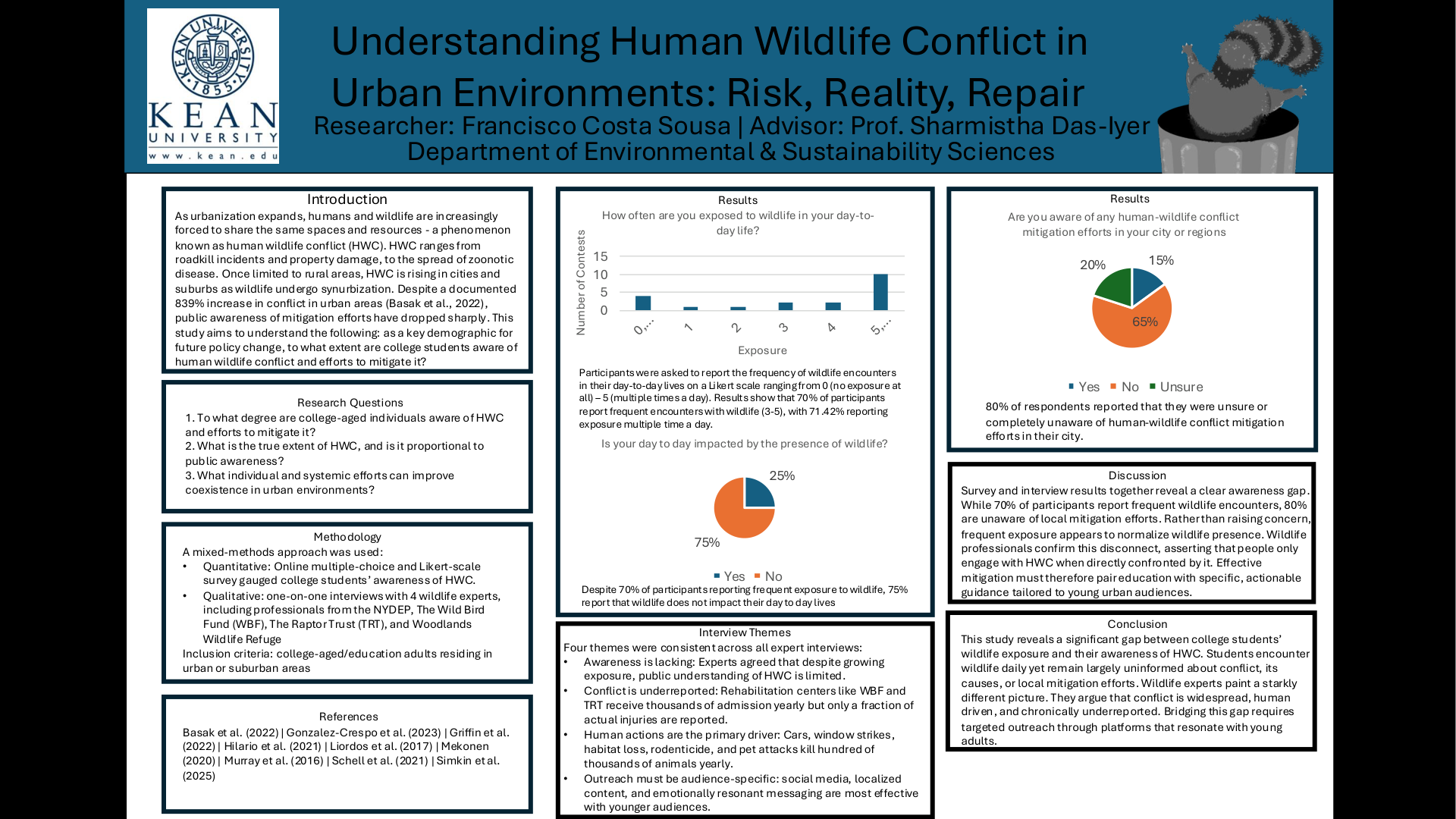
The present study evaluates college students’ awareness of human-wildlife conflict (HWC) in urban environments and efforts to mitigate it. In addition, it compares their perceptions of HWC with the ecological realities as described by wildlife professionals. Using a mixed methods approach, the researcher combined survey data from college-aged, college educated, urban residential participants with interviews from four wildlife experts. Survey results show that although a majority of students are frequently exposed to wildlife in their day-to-day lives, they lack familiarity with the concept of HWC and are generally unaware of local mitigation efforts. Contrastingly, interview findings reveal that conflict is widespread, human-driven, and often goes unnoticed by the general public. Together, these results highlight an awareness gap that may hinder the long term success of conflict mitigation efforts. The study suggests that targeted education and audience-specific outreach which accounts for sociocultural and economic factors are essential for improving long-term HWC mitigation strategies.