
Teaching Social Engagement and Communications Skills to Children with ASD
Ashley Baez
Co-Presenters: Ashley Baez
College: College of Education
Major: Applied Behavior Analysis
Faculty Research Mentor: Daphna El Roy
Abstract:
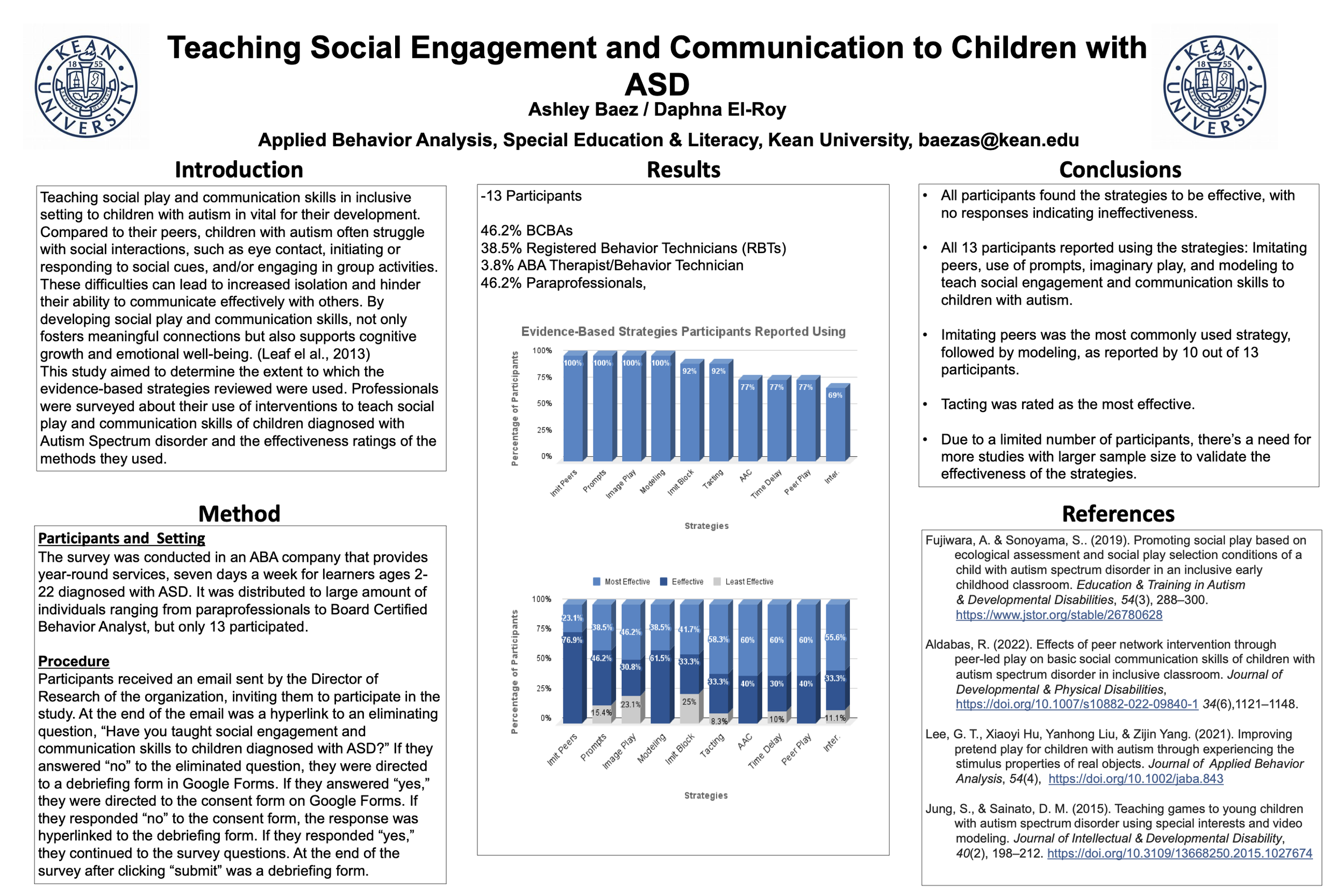
Children with autism often exhibit difficulties in socializing (e.g., making eye contact, initiating, responding to social initiations) and may favor solitary play, compared to their neurotypical peers. Given the challenges they face in social interactions and verbal/nonverbal communication, the research seeks to identify interventions that enhance their ability to engage in meaningful interactions. Teaching these skills may improve other ones and can enhance quality of life. Embracing social inclusion nurtures empathy, acceptance, and understanding amongst all children, giving everyone a sense of community (Leaf el al., 2013). A literature review of effective interventions to teach children with autism social and communication skills was conducted. An anonymous survey was developed on Google Forms to investigate the extent to which the evidence-based interventions were used by professionals, and their ratings of effectiveness of the interventions they used. Anticipating the results, the study may provide valuable insight and demonstrate that individualized approaches generate the most effective outcome.