
Advances in the Understanding and Treatment of Migraine in Women
Bella DiGioia
Co-Presenters: Individual Presentation
College: The Dorothy and George Hennings College of Science, Mathematics and Technology
Major: Biology
Faculty Research Mentor: Adriana Tagliaferro
Abstract:
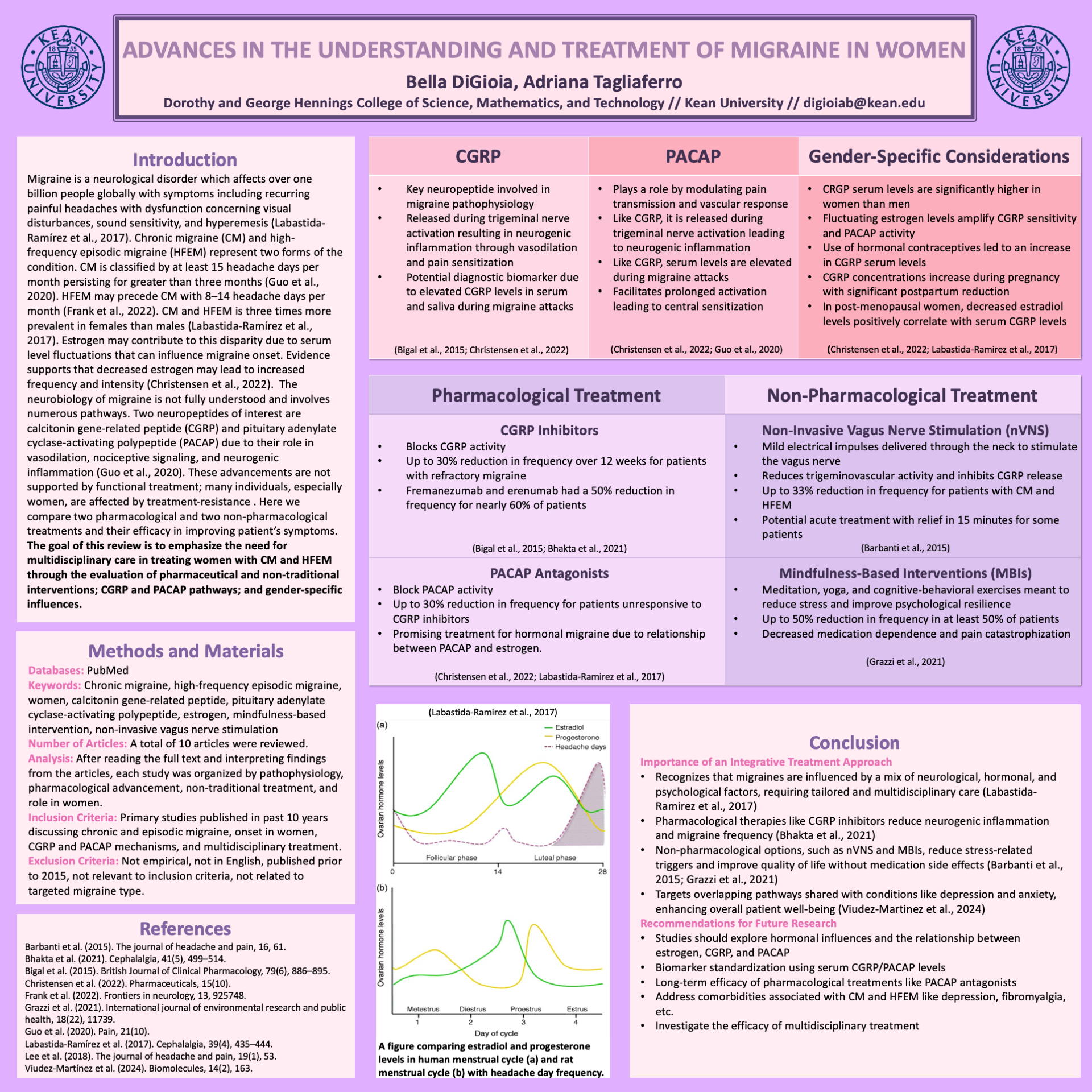
Migraine is a neurological disorder that affects the quality of life for millions globally, with many experiencing symptoms as severe as nausea, loss of vision, and suicidal thoughts. Two types of this disorder are chronic migraine (CM) and high-frequency episodic migraine (HFEM) which vary in headache day frequency. This condition is more prevalent in women which may be due to hormonal, neurobiological, and environmental factors. Specifically, two neuropeptides may influence the frequency and intensity of its pathophysiology due to variations in their levels. This review aims to discuss the roles of calcitonin gene-related peptide (CGRP) and pituitary adenylate cyclase-activating polypeptide (PACAP) as neural mechanisms contributing to migraine pathophysiology. These neuropeptides are current treatment targets for CM and HFEM, as well as potential biomarkers for diagnosis. Pharmacological treatments have been geared towards blocking these neuropeptides, as CGRP inhibitors and PACAP receptor antagonists show relief in patients that were previously treatment-resistant. Interventions like non-invasive vagus nerve stimulation and mindfulness-based interventions effectively address the emotional and cognitive aspects of migraine management as well. The integration of pharmacological and non-pharmacological treatments shows efficacy in treating women and comorbid individuals, whose migraines are often triggered by stress, hormonal changes, and environmental factors. This review synthesizes studies conducted within the last 10 years to highlight new advances in the treatment of CM and HFEM in women. In addition, the effects of CGRP and PACAP on the incapacitating nature of migraine are investigated alongside non pharmacological measures to optimize patient outcomes. By combining pharmaceutical and holistic approaches, patients may experience fewer headache days, as well as have less reliance on medication and caregivers.