
Arts-Based Interventions and Mental Health Outcomes in Young People
Ashley Acevedo
Co-Presenters: Heather Gonzalez
College: College of Education
Major: Art Education
Faculty Research Mentor: Adara Goldberg
Abstract:
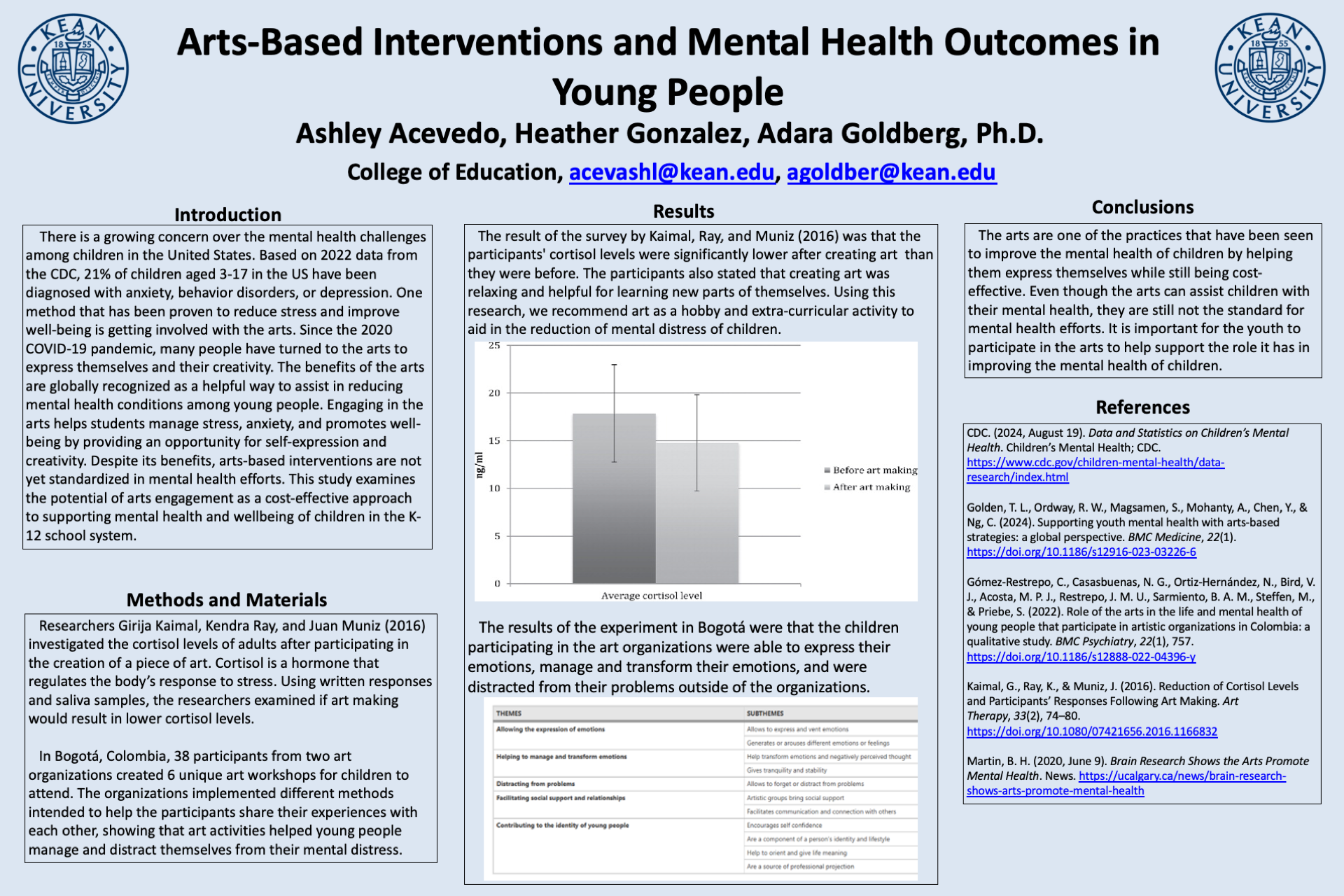
There is a growing concern over the mental health challenges among children in the United States. Based on data from 2022, 21% of children aged 3-17 in the US have been diagnosed with anxiety, behavior disorders, or depression, according to the CDC. One method that has been proven to reduce stress and well-being is getting involved with the arts. Since the 2020 pandemic, many people have turned to the arts as a way to express themselves and their creativity. The benefits of the arts are globally recognized as a helpful way to assist in reducing mental health conditions among young people. Engaging in the arts helps students manage stress, anxiety, and well-being by providing an opportunity for self-expression and creativity. Despite its benefits, arts-based interventions are not yet standard in mental health efforts. This study examines the potential of arts engagement as a cost-effective approach to supporting mental health and wellbeing of children in the K-12 school system.