
The Success of Sustainability Marketing Among Generation Z
Rachel Hennessey
Co-Presenters: Individual Presentation
College: College of Business and Public Management
Major: Marketing
Faculty Research Mentor: Aaron van Klyton
Abstract:
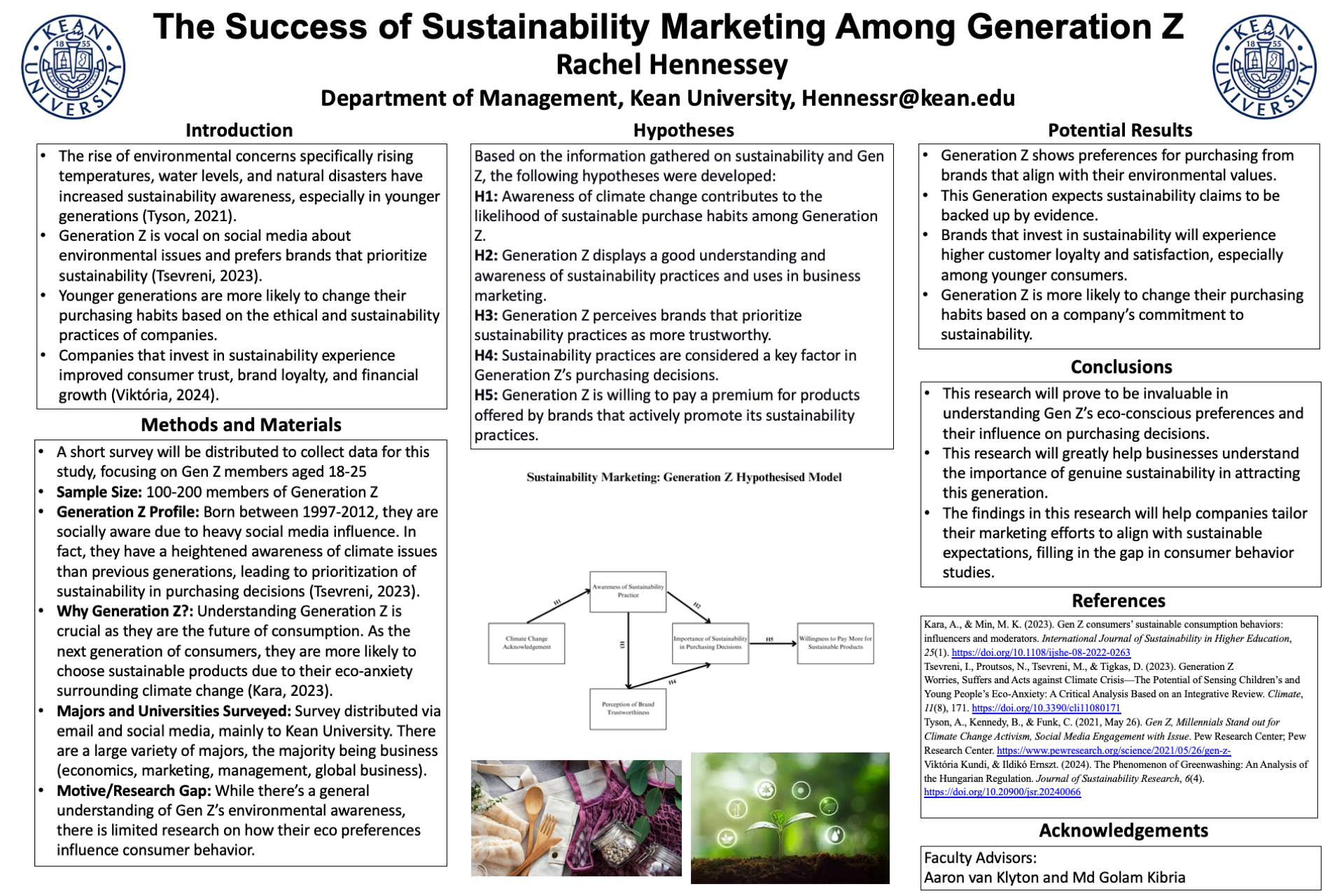
This research explores the influence of sustainability awareness on the purchasing behaviors of Generation Z, a demographic known for its heightened environmental consciousness. With concerns regarding climate change, rising temperatures, and natural disasters increasing, Generation Z has become increasingly vocal on social media about environmental issues, with many preferring brands that prioritize sustainability. This study will examine how the environmental awareness of this generation shapes their consumer behaviors and purchasing decisions. A survey will be distributed to 100-200 members of Generation Z, aged 18-25, primarily at Kean University studying business majors (finance, economics, management, marketing). The following hypotheses will be tested: H1: Awareness of climate change contributes to the likelihood of sustainable purchase habits among Generation Z. H2: Generation Z displays a strong understanding and awareness of sustainability practices and their use in business marketing. H3: Generation Z perceives brands that prioritize sustainability practices as more trustworthy. H4: Sustainability practices are considered a key factor in Generation Z’s purchasing decisions. H5: Generation Z is willing to pay a premium for products offered by brands that actively promote their sustainability practices. It is expected that the results will suggest that this generation is more likely to trust and remain loyal to brands that invest in sustainability, with many willing to pay a premium for sustainable products. This study will fill in a gap in consumer behavior research, providing valuable insights into the factors that attribute to Generation Z's purchasing decisions. This study will be useful for businesses looking to attract Generation Z as long term customers through the use of true sustainable practices and marketing.