
Exertional Rhabdomyolysis in a High School Football Athlete
Sofia Granados
Co-Presenters: Colabella III F, CarrubaG
College: College of Health Professions and Human Services
Major: MS.ATHLETICTRNG
Faculty Research Mentor: Nicole Lowy
Abstract:
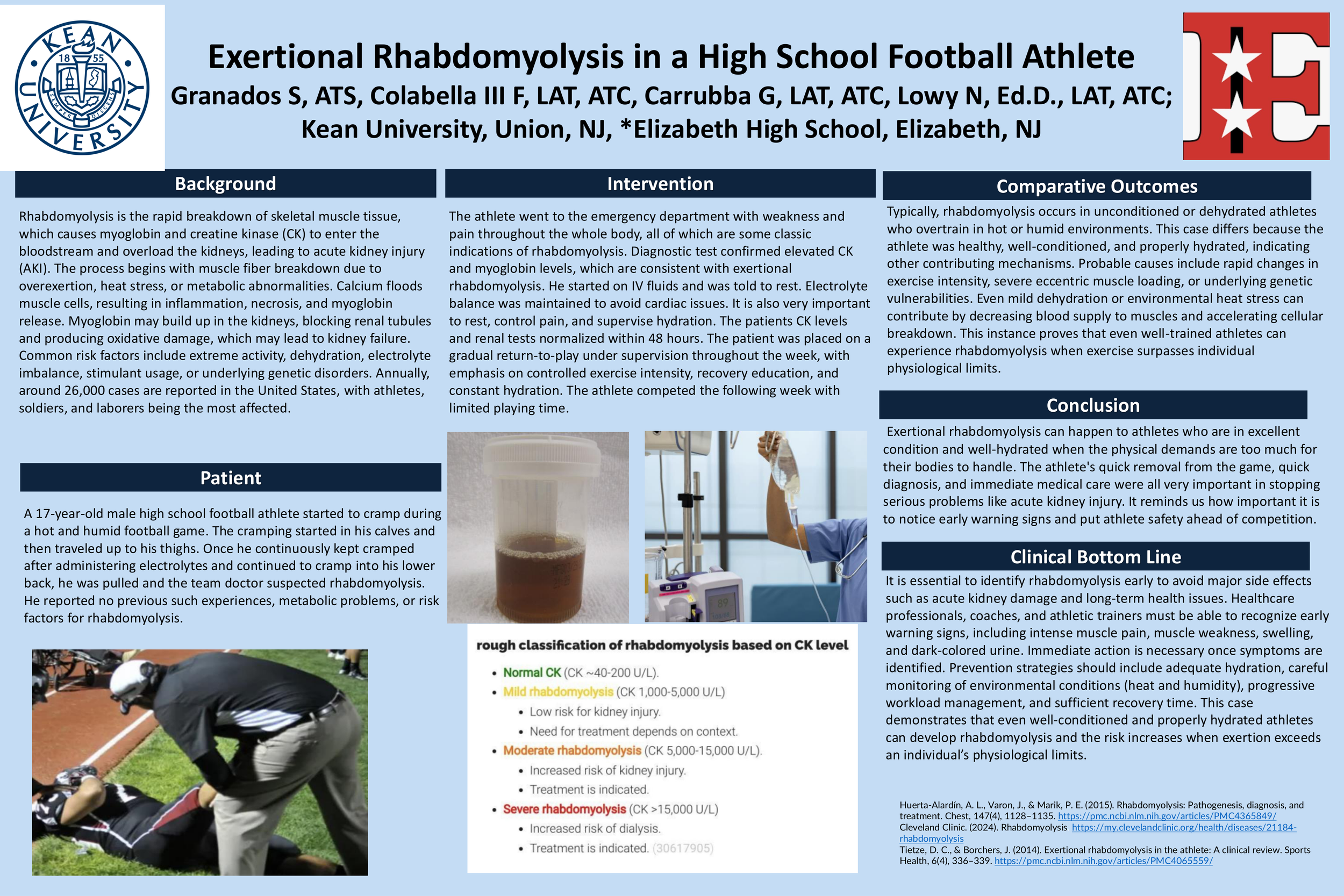
Rhabdomyolysis is the rapid breakdown of skeletal muscle tissue, which causes myoglobin and creatine kinase (CK) to enter the bloodstream and overload the kidneys, leading to acute kidney injury. The process begins with muscle fiber breakdown due to overexertion, heat stress,or metabolic abnormalities. Calcium floods muscle cells, resulting in inflammation, necrosis, and myoglobin release. Myoglobin may build up in the kidneys, blocking renal tubules and producing oxidative damage, which may lead to kidney failure. Annually, around 26,000 cases are reported in the United States.A 17-year-old male high school football athlete started to cramp during a hot and humid football game. The cramping started in his calves and then traveled up to his thighs. Once he continuously kept cramped after administering electrolytes and continued to cramp into his lower back, he was pulled. He reported no previous such experiences, metabolic problems, or risk factors for rhabdomyolysis.The athlete went to the emergency department with weakness and pain throughout the whole body. Diagnostic test confirmed elevated CK and myoglobin levels, which are consistent with exertional rhabdomyolysis. He started on IV fluids and told to rest. Electrolyte balance was maintained to avoid cardiac issues. The patient’s CK levels and renal tests normalized within 48 hours. The patient was placed on a gradual return-to-play under supervision throughout the week, with emphasis on controlled exercise intensity, recovery education, and constant hydration. The athlete competed the following week with limited playing time.Typically, rhabdomyolysis occurs in unconditioned or dehydrated athletes who overtrain in hot or humid environments. This case differs because the athlete was healthy, well-conditioned, and properly hydrated, indicating other contributing mechanisms including rapid changes in exercise intensity, severe eccentric muscle loading, or underlying genetic vulnerabilities. This instance proves that even well-trained athletes can experience rhabdomyolysis when exercise surpasses individual physiological limits.It is essential to identify rhabdomyolysis early to avoid major side effects such as acute kidney damage and long-term health issues. Healthcare professionals must be able to recognize early warning signs, including intense muscle pain, muscle weakness, swelling, dark-colored urine. Immediate action is necessary once symptoms are identified.