
Physiological and Cognitive Benefits of Salat (Islamic Prayer) in Brain Injury Rehabilitation
Ali Tejaoglu
Co-Presenters: Individual Presentation
College: College of Health Professions and Human Services
Major: DPT.PHYSTHERAPY
Faculty Research Mentor: Jenna Tucker
Abstract:
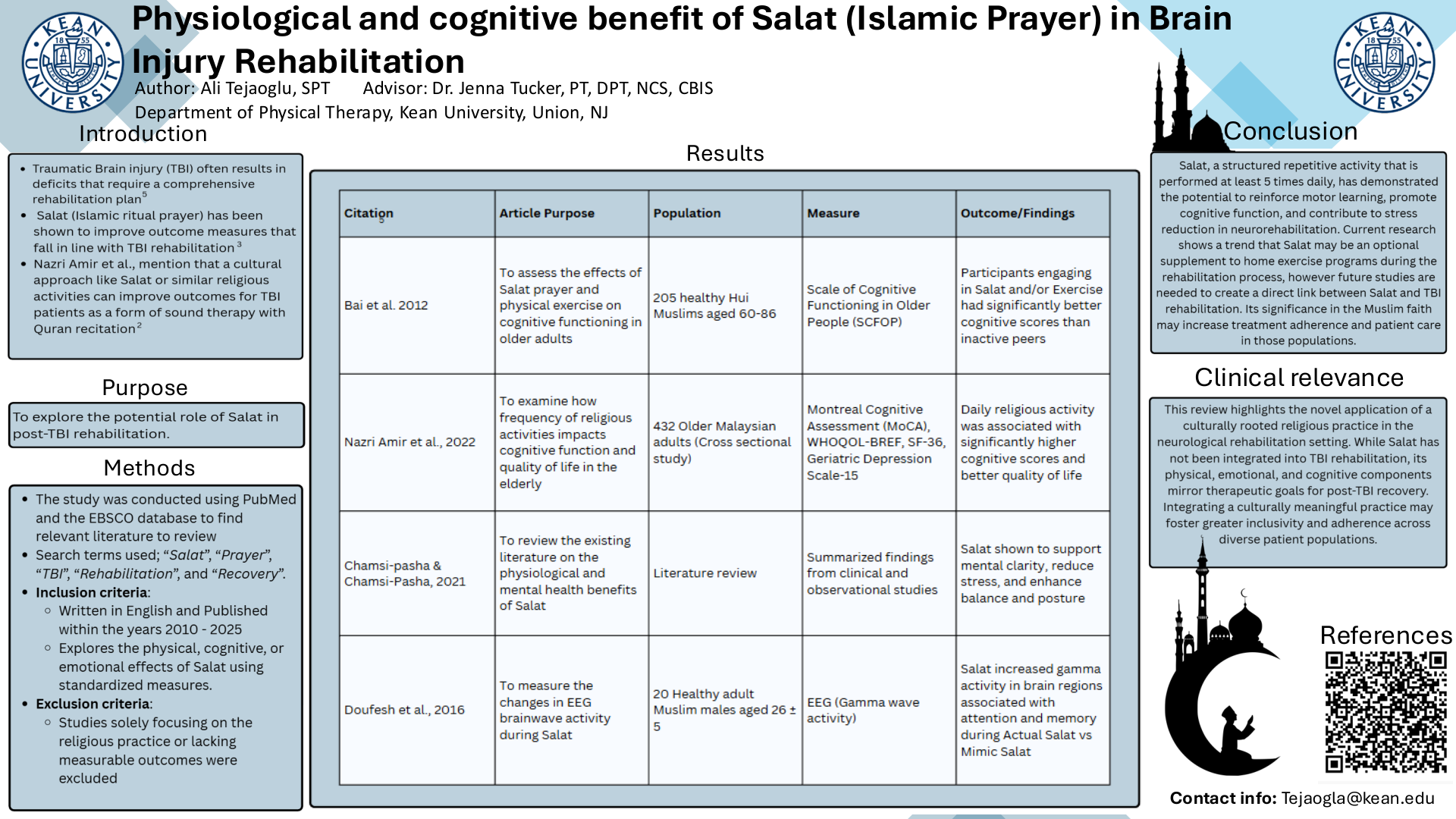
Traumatic Brain Injury (TBI) often leads to lasting impairments in physical, cognitive, and emotional functionality. While conventional rehabilitation emphasizes a multidisciplinary approach, growing interest in culturally responsive practices may promote more patient engagement and holistic recovery. Salat, the Islamic ritual prayer, combines structured physical movement, rhythmic breathing, and meditative mindfulness that may align with motor, emotional, and cognitive rehabilitation goals. This project explores the potential roles of Salat in post-TBI rehabilitationA literature review was conducted using PubMed and the EBSCO database with keywords including “Salat”, “Prayer”, “TBI”, “rehabilitation”, and “recovery”. Inclusion criteria: Peer-reviewed studies published during 2010 – 2025, in English, exploring physical, cognitive, or emotional effects of Salat or similar practices in neurologic rehabilitation using standardized measures. Studies solely focusing on religious practice or lacking measurable outcomes were excluded.The initial search yielded 92 studies, four of which met the inclusion criteria: two cross-sectional studies, a quasi-experimental study, and a literature review. Most of these studies suggest that Salat may benefit low-impact activities by improving proprioception, balance, strengthening, and joint mobility through stimulating the parasympathetic nervous system. However, there are currently no peer-reviewed studies that examine the effects of Salat specifically in the TBI rehabilitation.There is currently insufficient evidence to determine the role Salat may take in current TBI rehabilitation due to the absence of studies directly examining Salat practice in individuals with TBI. While Salat has been explored in other neurological and musculoskeletal populations, no peer-reviewed research to date establishes a direct association between Salat and TBI-specific rehabilitation outcomes. Although Salat has not been studied specifically in TBI populations, existing literature in other neurological conditions suggest potential benefits related to proprioception, balance, joint mobility, and low impact strengthening. Future research is warranted to directly investigate the rehabilitative impact of Salat-based movement in individuals recovering from TBI. Incorporating Culturally inclusive activities like Salat may enhance adherence and engagement with treatment plans for post TBI recovery.Keywords:Traumatic brain injury, Neurorehabilitation, Salat, Culturally Responsive Care, Cognitive Recover