
Understanding Determinants of Influencer Marketing Effectiveness in the Digital Age
Amna Kapo
Co-Presenters: Maya Edwards, Anasia Favors, Molly Flammia
College: College of Business and Public Management
Major: BS.MARKETING
Faculty Research Mentor: Shweta Singh
Abstract:
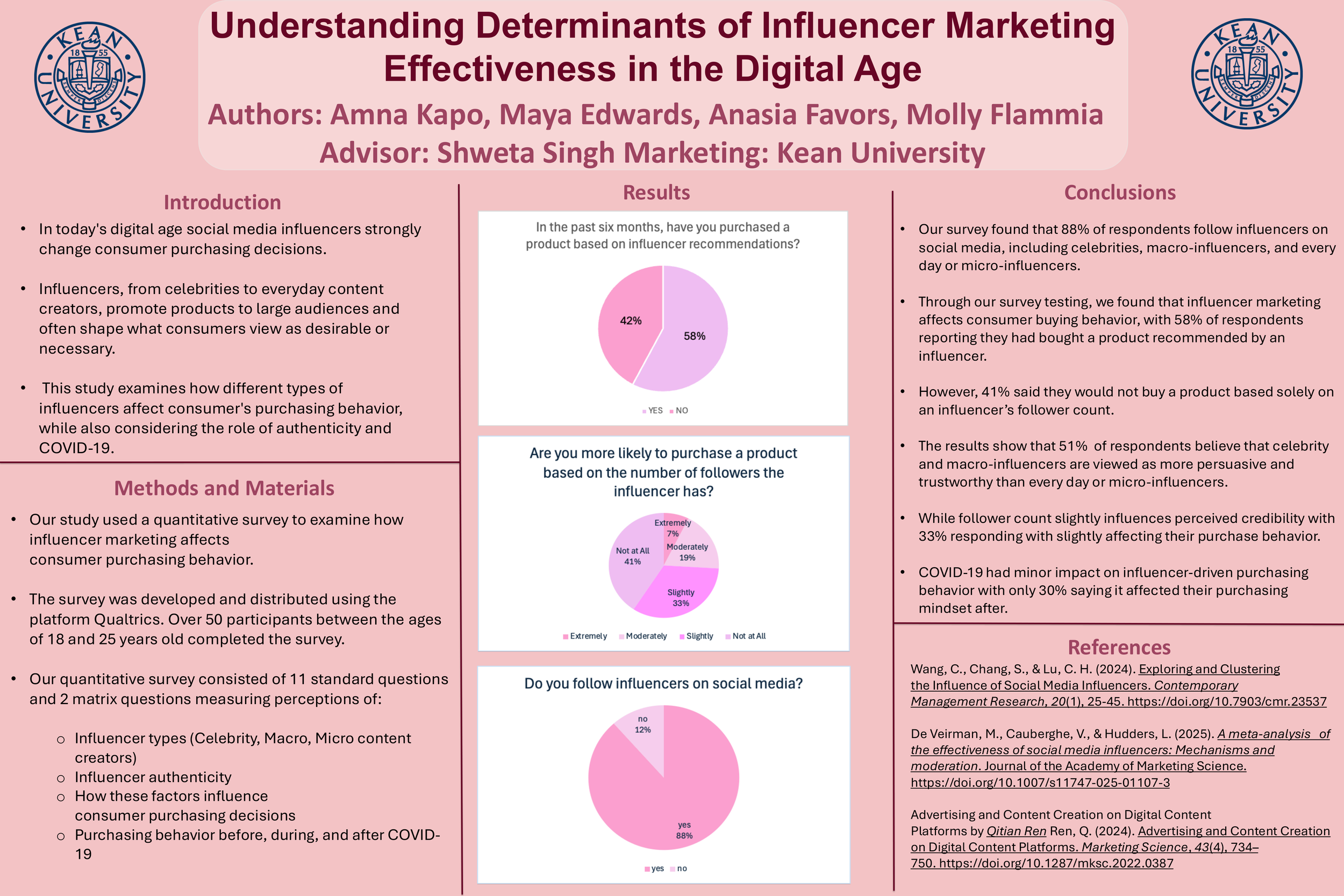
In today’s digital age, both the number of social media influencers and the magnitude of their impact on consumer purchase decisions are rapidly increasing. With the click of a button, consumers are exposed to new products daily, as influencers ranging from celebrities to everyday content creators—convince consumers that these products are essential. This study explores how influencer marketing affects consumer purchasing behavior, comparing the effectiveness of celebrity, macro, micro, and everyday content creators, while also considering influencer authenticity and the impact of COVID-19.
The research methods we will use are a 15-20 question quantitative survey that will be distributed to a wide range of people within the age of 18-25. Approximately 50 individuals will be participating in this research, completing a survey that measures their trust and demand for authenticity in Influencer marketing. This survey will measure the extent of influencer marketing on both the amount and type of content consumed online. In addition, participants will be asked about their purchase behavior prior to Covid-19 and any changes thereafter.
In conclusion, this research study should highlight that online content can increase a person's purchasing power and influence a broad scope of purchases based on what they are presented through social media outlets and content creators. This research can be useful in helping brands and businesses understand the influence of content creators wield. Raising awareness about digital influence and media literacy is important for society because it helps build trust between influencers and viewers.
Transparency from influencers creates an environment where consumers feel more confident in their purchasing decisions rather than automatically dismissing promoted products. Since influencers often act as ambassadors for brands, a lack of authenticity can mislead consumers and damage trust not only in the brand but also in digital content overall. Maintaining a level of digital literacy allows consumers to critically evaluate online influence, recognize authentic marketing, and engage more responsibly in digital spaces.
Keywords: Influencer, Social Media, Internet, Promotions, Consumer Behavior, Marketing