
The Effect of Intranasal (IN) TLQP-21 Delivery on Neurotrophins in Alzheimer's Disease
Omotounyosi Desiree Olorungbemi
Co-Presenters: Individual Presentation
College: Hennings College of Science Mathematics and Technology
Major: BS.BIO/CELL/MOLEC
Faculty Research Mentor: Meenakshi Bose, Stephen Salton
Abstract:
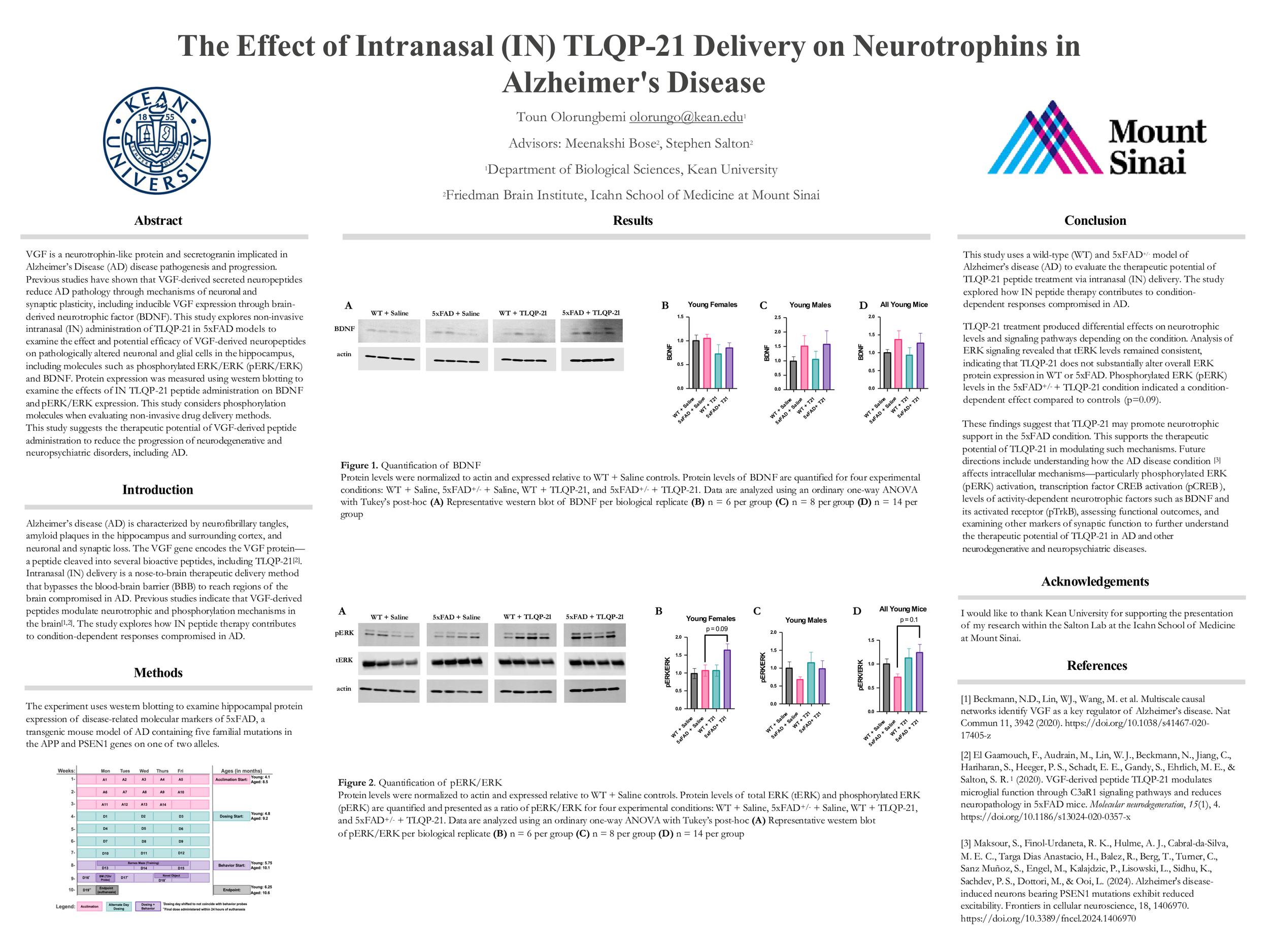
VGF is a neurotrophin and secretogranin implicated in Alzheimer’s Disease (AD) disease progression. Previous studies have shown the importance of VGF-derived secreted peptides such as TLQP in AD pathology in mice through signaling and modulation mechanisms important for synaptic plasticity, such as inducible expression of VGF through the presence of brain-derived neurotrophic factor (BDNF). This study explores non-invasive delivery of TLQP-21 to transgenic AD mouse models via intranasal (IN) administration to examine the effects of IN-TLQP-21 on neuronal and glial cells in the hippocampus, such as post-synaptic density (PSD), phosphorylated ERK/ERK (pERK/ERK), and BDNF to determine possible drug efficacy. Brain tissues were homogenized and protein expression was measured using Western blotting to examine the effects of IN-TLQP-21 on BDNF, pERK/ERK, and PSD. This research suggests the importance of signaling research when considering non-invasive delivery of TLQP. The findings of this ongoing study suggest the potential of intranasal peptide administration for further understanding neurodegenerative and neurodevelopmental disorders.