
The Role of Iron Deficiency Anemia in Ischemic versus Hemorrhagic Cerebrovascular Accidents (CVA) in Females
Saira Khan
Co-Presenters: Brianna Wynne
College: College of Health Professions and Human Services
Major: DPT.PHYSTHERAPY
Faculty Research Mentor: Jenna Tucker
Abstract:
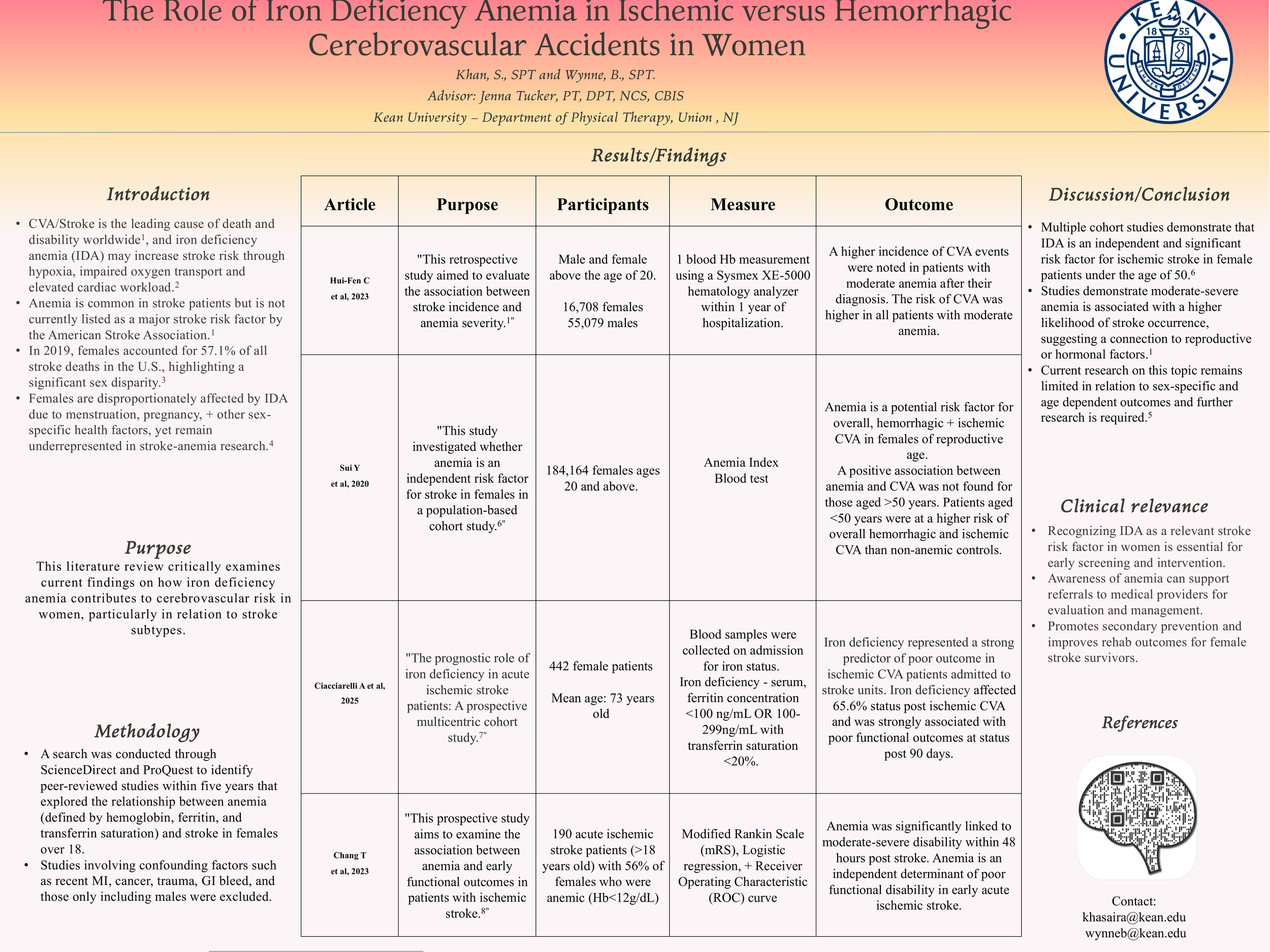
Stroke remains a leading cause of death and disability, with evidence suggesting that iron deficiency anemia (IDA) may impact stroke risk and outcomes in females. Despite its high prevalence due to menstruation, pregnancy, and other sex-specific factors, IDA is not recognized as a major stroke risk factor. diPurpose: This literature review critically examines current findings on how IDA contributes to cerebrovascular risk in women, focused on stroke subtypes.MethodsA search was conducted through ScienceDirect and ProQuest to identify peer-reviewed studies between 2020-2025 that explored the relationship between anemia (defined by hemoglobin, ferritin, and transferrin saturation) and stroke in females over 18. Confounding factors such as recent MI, cancer, trauma, or GI bleed were excluded, as well as only male participants.ResultsThe initial literature search yielded 8 articles and 4 met inclusion criteria. A retrospective cohort study found patients with moderate anemia having a higher incidence of stroke. A population-based cohort study identified females under 50 with anemia were at significantly higher risk for ischemic and hemorrhagic strokes. A prospective multi-centric cohort study found prevalent iron deficiency among females and poor functional outcomes 90 days post-ischemic stroke. A prospective cross-sectional study found widespread anemia among female stroke survivors and served as an independent predictor of moderate-severe disability within 48 hours post-stroke.ConclusionStudies demonstrate that moderate-severe IDA is associated with a higher likelihood of stroke occurrence, suggesting a connection to reproductive or hormonal factors. Research on sex-specific and age dependent stroke outcomes is limited, and further studies are required.Clinical RelevanceFor clinicians in neurologic or women's health settings, recognizing anemia’s role can improve patient assessments and facilitate timely referrals for underlying hematologic conditions. Integrating this awareness helps identify high-risk individuals, promote secondary prevention, and enhance rehabilitation outcomes for women post-stroke.Keywords: Ischemic/Hemorrhagic stroke, Anemia, Iron Deficiency, FemalesObjectives:1. Compare the prevalence of IDA in female patients presenting with ischemic stroke versus those with hemorrhagic stroke.2. Assess whether the severity of IDA (hemoglobin and ferritin levels) is correlated with stroke.