
The effect of Kinesiotape versus placebo on pain and disability associated with chronic low back pain in adults: A systematic review
Dylan Cumella
Co-Presenters: Nicholas Cupo, Angela Guerra, Elisabeth Carter
College: College of Health Professions and Human Services
Major: DPT.PHYSTHERAPY
Faculty Research Mentor: Carla Enriquez, Alka Bishnoi
Abstract:
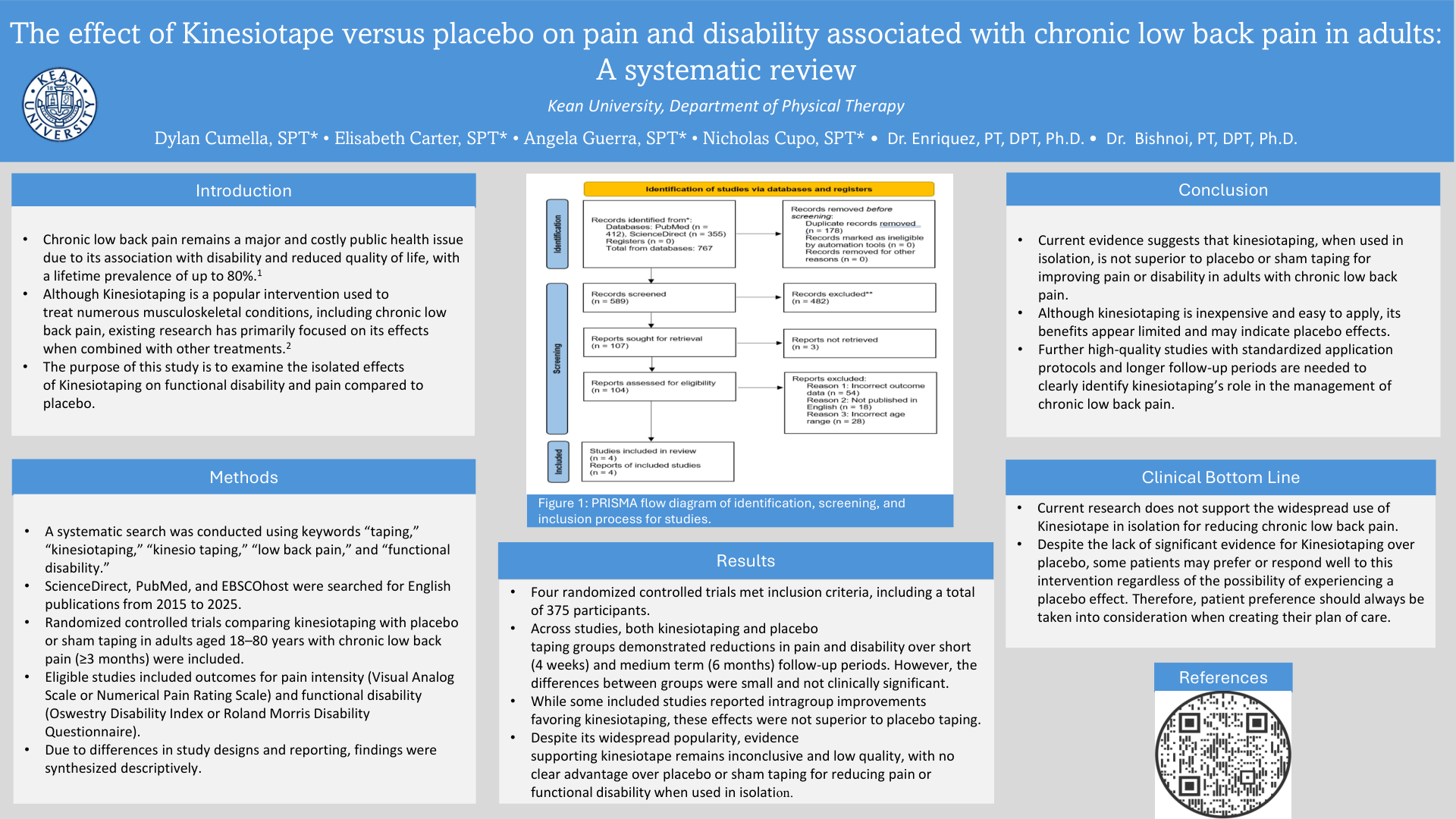
Chronic low back pain remains a major and costly public health issue due to its association with disability and reduced quality of life, with a lifetime prevalence of up to 80%. Although Kinesiotaping is a popular intervention used to treat numerous musculoskeletal conditions, including chronic low back pain, existing research has primarily focused on its effects when combined with other treatments. The purpose of this study is to examine the isolated effects of Kinesiotaping on functional disability and pain compared to placebo.A systematic search was conducted using keywords “taping,” “kinesiotaping,” “kinesio taping,” “low back pain,” and “functional disability.” ScienceDirect, PubMed, and EBSCOhost were searched for English publications from 2015 to 2025. Randomized controlled trials comparing kinesiotaping with placebo or sham taping in adults aged 18–80 years with chronic low back pain (≥3 months) were included. Eligible studies included outcomes for pain intensity (Visual Analog Scale or Numerical Pain Rating Scale) and functional disability (Oswestry Disability Index or Roland Morris Disability Questionnaire). Due to differences in study designs and reporting, findings were synthesized descriptively.Four randomized controlled trials met inclusion criteria, including a total of 375 participants. Across studies, both kinesiotaping and placebotaping groups demonstrated reductions in pain and disability over short (4 weeks) and medium term (6 months) follow-up periods. However, the differences between groups were small and not clinically significant. While some included studies reported intragroup improvements favoring kinesiotaping, these effects were not superior to placebo taping. Despite its widespread popularity, evidence supporting kinesiotape remains inconclusive and low quality, with no clear advantage over placebo or sham taping for reducing pain or functional disability when used in isolation.Current evidence suggests that kinesiotaping, when used in isolation, is not superior to placebo or sham taping for improving pain or disability in adults with chronic low back pain. Although kinesiotaping is inexpensive and easy to apply, its benefits appear limited and may indicate placebo effects. Further high-quality studies with standardized application protocols and longer follow-up periods are needed to clearly identify kinesiotaping’s role in the management of chronic low back pain.Keywords: taping, kinesiotaping, low back pain, functional disability