
Loneliness, Rejection Sensitivity, and Emotion Regulation
Doris Chen
Co-Presenters: Evan Baidwan, Malia Coghlan
College: College of Health Professions and Human Services
Major: PSYD.SCHL/CLNL
Faculty Research Mentor: Aditi Vijay
Abstract:
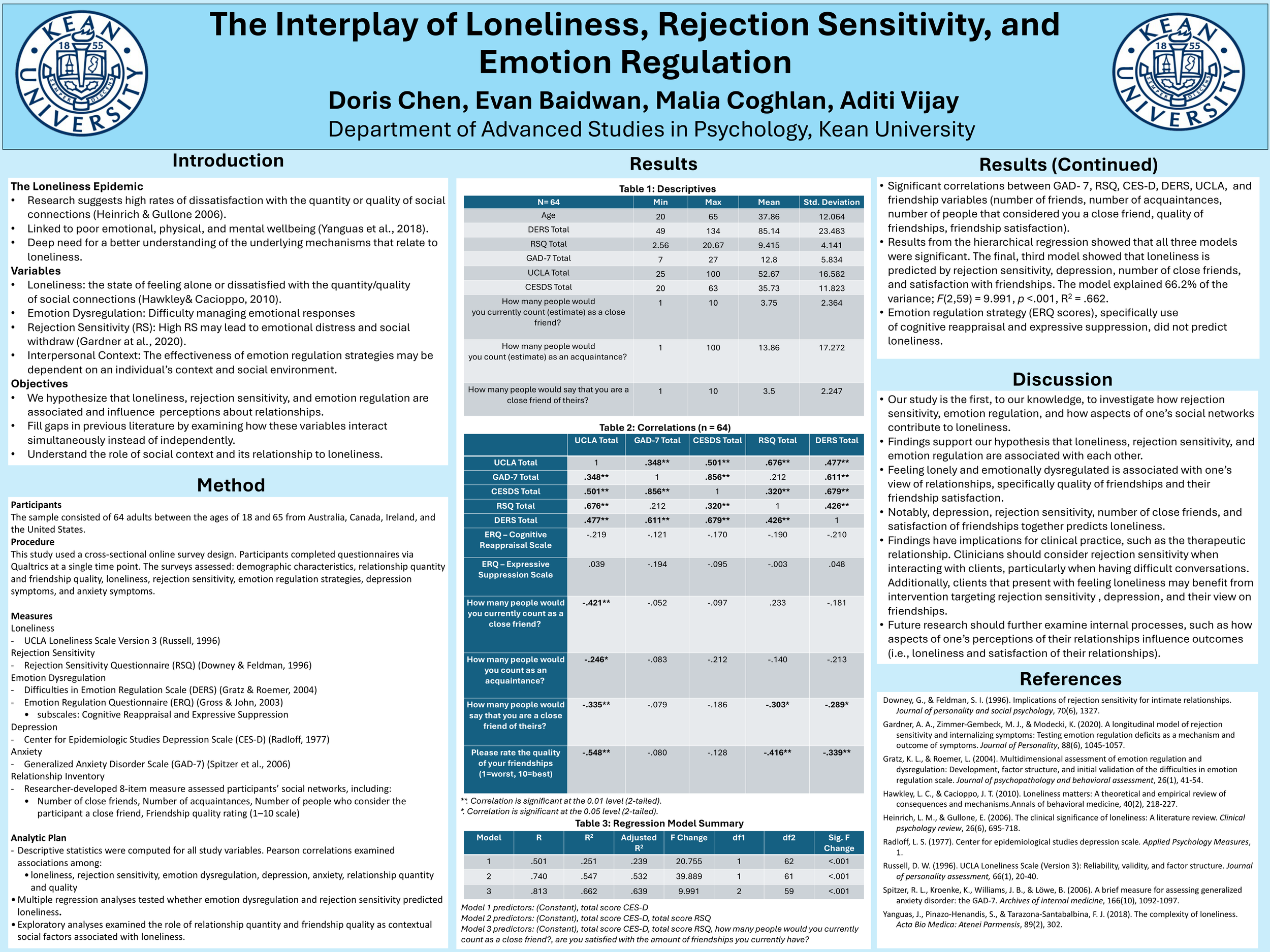
Loneliness, defined as the state of feeling alone or dissatisfied with the quantity or quality of social connections, is associated with lower emotional, physical, and mental wellbeing. However, interventions for loneliness have found only small effect sizes overall. These limited outcomes suggested a need for a more comprehensive understanding of the psychological processes that contribute to loneliness. The understanding of these processes can be used to inform effective interventions.Research has shown that loneliness is associated with emotion dysregulation and rejection sensitivity. Individuals who struggle to regulate emotions may be more vulnerable to receiving social interactions as threatening or rejecting. Rejection sensitivity may further influence emotional distress and withdraw from social relationships. Interpersonal interactions influence the effectiveness of emotion regulation strategies. This emphasizes the need to consider contextual factors surrounding the links between loneliness, rejection sensitivity, and emotion regulation.Although earlier studies have independently examined associations among loneliness, rejection sensitivity, and emotion regulation, there is limited research that documents how these variables interact within the context of an individual's social environment. To the best of the authors’ knowledge, studies to date have not yet examined the number of social contacts or quality of social environment that participants have in relation to these three variables of interest. It is still unclear how interpersonal context may influence these interactions and contribute to experiences of loneliness.The current study aims to fill this gap and explore the relationship between loneliness, rejection sensitivity, and emotion regulation processes. By furthering our understanding of these three contributing factors, the study will contribute to efforts in the field of clinical psychology to better promote a high quality of life with meaningful relationships. A total of 64 participants completed a survey at one timepoint through the Cloud Connect research platform. They completed questionnaires about their current relationships, depression, anxiety, sensitivity to rejection, loneliness, and emotion regulation strategies. We will present preliminary data on these relationships and implications. The findings will help us understand the processes that contribute to loneliness, inform future research, and support the development of more targeted interventions.Keywords: loneliness, emotion regulation, rejection sensitivity