
Beliefs and Attitudes of Genetic Counselors Toward Patients with Sickle Cell Disease
Jade Gmitter
Co-Presenters: Individual Presentation
College: The College of Health Professions and Human Services
Major: Genetic Counseling
Faculty Research Mentor: Jill Fischer
Abstract:
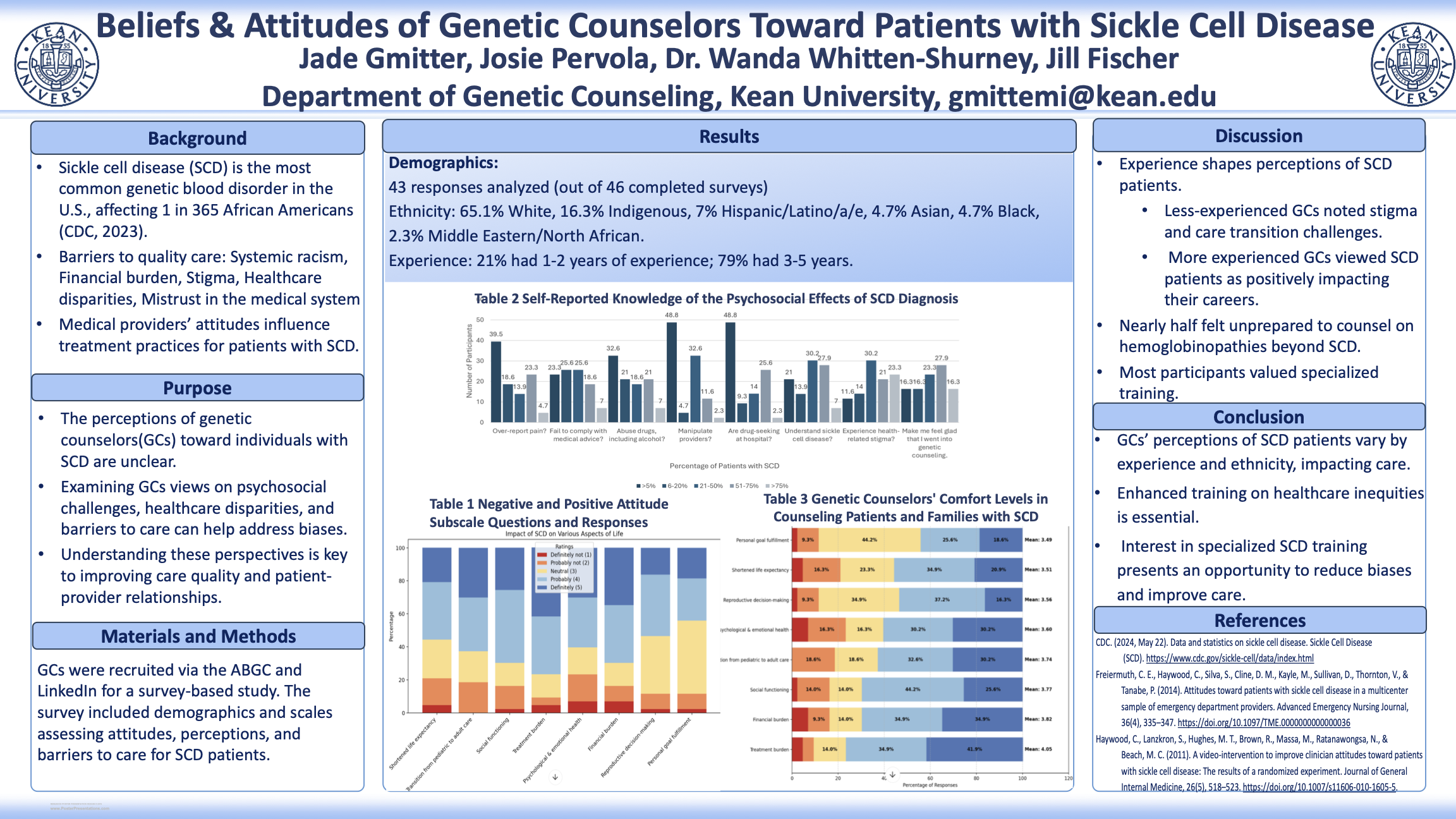
Purpose: Sickle cell disease (SCD) is the most common genetic blood disorder in the U.S., affecting 1 in 365 African Americans (CDC, 2023). Barriers to quality care include systemic racism, financial burden, stigma, healthcare disparities, and mistrust. Medical providers’ attitudes correlate with treatment practices for patients with SCD. It is unclear if genetic counselors (GCs), who assist families in managing genetic conditions, have negative perceptions of individuals with SCD. This study evaluates GCs’ perceptions of psychosocial challenges, healthcare disparities, barriers to care, and attitudes toward individuals with SCD.Methods: This survey-based study recruited GCs through the American Board of Genetic Counseling (ABGC) and LinkedIn. The survey included demographic items and scales to evaluate attitudes and perceptions toward SCD patients, psychosocial challenges, healthcare disparities, and barriers to care.Conclusion: Forty-three participants provided sufficient data for analysis. Most GCs believed that over 5% of individuals with SCD over-report pain (60.5%; n=26), fail to comply with medical advice (76.7%; n=33), abuse drugs (67.4%; n=29), manipulate providers (51.2%; n=22), and seek drugs (51.2%; n=22). Less than half (46.5%; n=20) felt comfortable counseling on hemoglobinopathies beyond SCD, while 60.5% (n=26) saw value in specialized SCD training. Experience influenced perceptions—nearly 30% of GCs with 3–5 years of experience believed most SCD patients over-report pain (29.4%; n=10), whereas all less-experienced GCs (1–2 years) believed fewer than 5% do (100%; n=9). Less-experienced GCs were more aware of care transition challenges and stigma, while more-experienced GCs saw SCD patients as positively shaping their careers. White participants (65.1%) were more likely to believe fewer patients over-report pain (57.1%; n=16), abuse drugs (50%; n=14), seek drugs (67.9%; n=19), or manipulate providers (67.9%; n=19).Significance: These findings suggest that GCs’ perceptions of individuals with SCD vary by experience and ethnicity, potentially influencing patient care. These findings and GCs’ desire for specialized SCD training highlights an opportunity to address biases and barriers to improve care quality and patient-provider relationships.Keywords: Sickle cell disease, genetic counselors, barriers to care