
Clinician Perspectives on the Advantages and Barriers to Treating Musculoskeletal Conditions Via Telehealth
Aliza Kurtz
Co-Presenters: Juliana Lefano, Anthony Rua, Leena Atieh, Cassidy Cardis
College: The College of Health Professions and Human Services
Major: Physical Therapy (DPT)
Faculty Research Mentor: Carla Enriquez
Abstract:
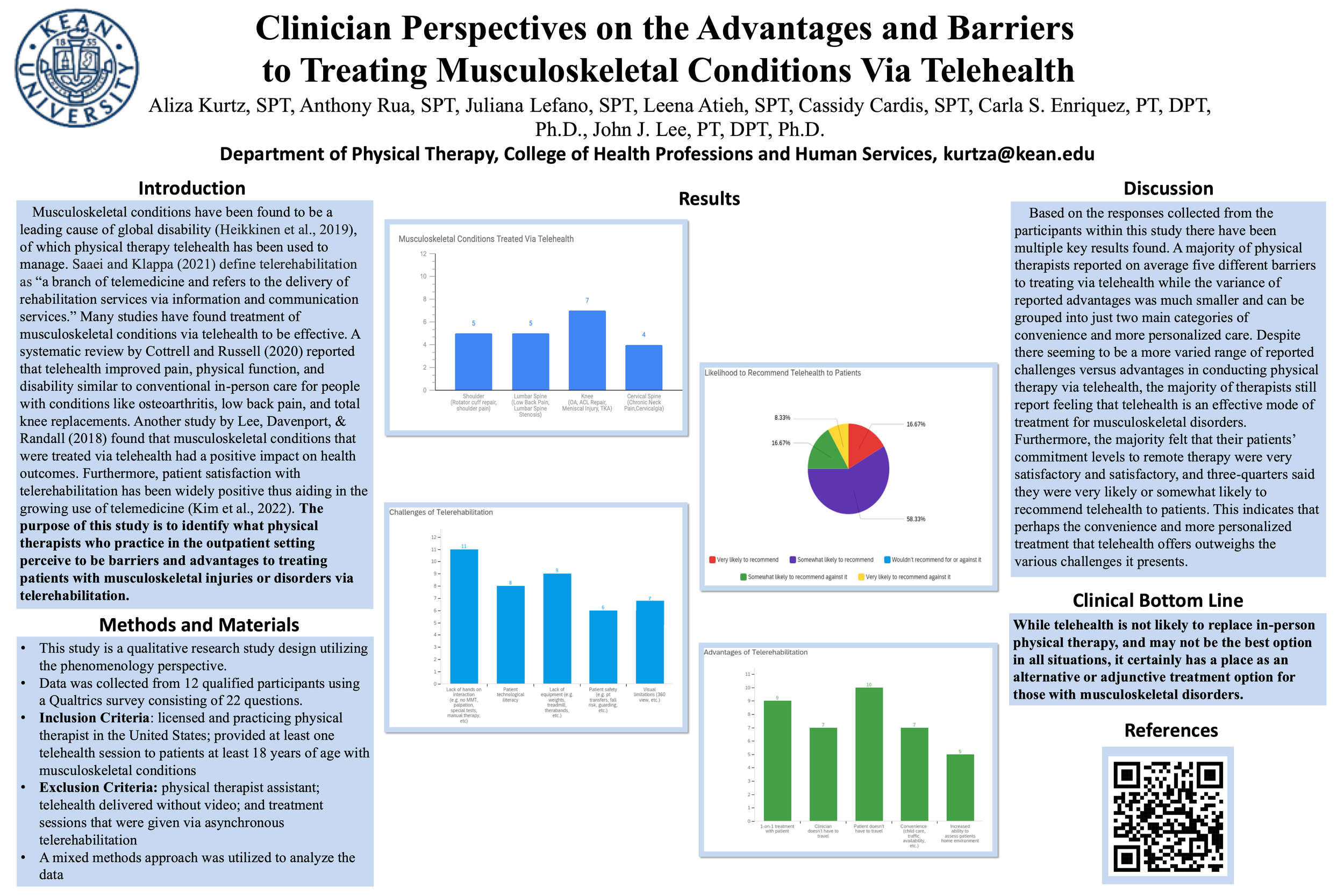
Title: Clinician Perspectives on the Advantages and Barriers to Treating Musculoskeletal Conditions Via TelehealthAuthors: Kurtz, A.,SPT, Rua, A.,SPT, Lefano, J., SPT, Atieh, L., Cardis, C.,SPT. Advisors: Carla S. Enriquez, PT, DPT, PhD, MS, OCS & John J. Lee, PT, DPT, PhDAbstract:The use of telehealth in the United States in the physical rehabilitation capacity has been on the rise. The objective of this study is to determine what physical therapists who practice in the outpatient setting perceive to be barriers and advantages to treating patients with musculoskeletal injuries or disorders via telerehabilitation.This is a qualitative research study design utilizing the phenomenology perspective. A mixed methods approach was used to analyze the data collected from the administered survey via Qualtrics completed by 18 participants.The findings of this study suggest that physical therapists believe telerehabilitation is an effective way to provide care when it is necessary. Overall, telerehabilitation has a place as an alternative or adjunctive treatment option for those with musculoskeletal disorders. However, further research is needed to determine if meaningful causal relationships truly exist between effectiveness and the varied ways in which telehealth sessions have been adapted and practically implemented.Keywords: Public health, telerehabilitation, musculoskeletal conditions, physical therapy