
Comparison of Anterior and Posterior Total Hip Arthroplasty Approaches on Strength and Function Clinical Outcomes: A Systematic Review
Dennis Fernandes
Co-Presenters: Daniel Harrison, Madeline Keelan, Joshua Medina
College: The College of Health Professions and Human Services
Major: Physical Therapy (DPT)
Faculty Research Mentor: Carla Enriquez
Abstract:
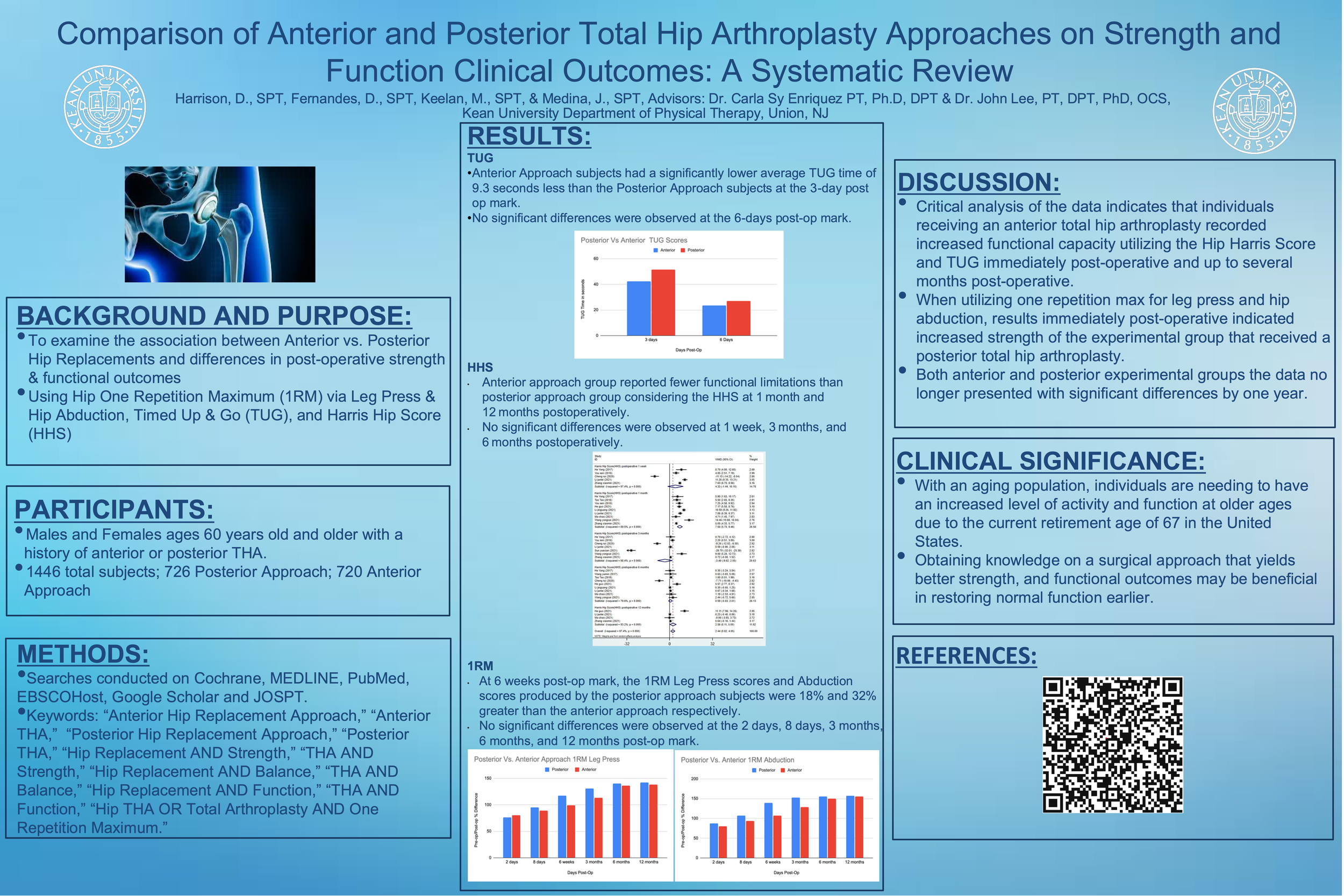
Introduction:A Total Hip Arthroplasty is characterized by the femoral head and neck, along with the acetabulum of the innominate being replaced with prosthetic components. THA can be performed through various approaches often determined by the surgeon's preference. Primary approaches for THA include anterior and posterior, each with different outcomes on strength, dynamic balance, and overall function.Purpose:The purpose of this systematic review is to compare the outcomes of anterior and posterior Total Hip Arthroplasty approaches with respect to aspects of recovery, highlighting differences in strength and function.Subjects:Our subjects are males and females ages 60 years old and older with a history of anterior or posterior THA.Methods:Searches conducted on Cochrane, MEDLINE, PubMed, EBSCOHost, Google Scholar and JOSPT. Inclusion criteria incorporated literature within one year of surgery. Exclusion criteria included research that exceeded one year after surgery. Data analysis consisted of qualitative comparison of outcomes including one repetition max, Harris Hip Scores, and TUG test scores.Conclusion:Critical analysis of the data indicates that individuals receiving an anterior total hip arthroplasty recorded increased functional capacity utilizing the Hip Harris Score and TUG immediately post-operative and up to several months post-operative. When utilizing one repetition max for leg press and hip abduction, results immediately post-operative indicated increased strength of the experimental group that received a posterior total hip arthroplasty. Both anterior and posterior experimental groups the data no longer presented with significant differences by one year.Clinical Relevance:With an aging population, individuals are needing to have an increased level of activity and function at older ages due to the current retirement age of 67 in the United States. Therefore, if older adults have an increased likelihood of needing a THA, obtaining knowledge on a surgical approach that yields increased strength and functional outcomes may be beneficial in restoring normal function earlier, and ultimately getting back to work sooner.
Keywords: Anterior Hip Replacement, Posterior Hip Replacement, TUG, Harris Hip Score, One Repetition Max