
Optimizing Occupations: A Culturally Responsive Program's impact on the social participation and quality of life of older adults in Urban public housing
Madeline Martino
Co-Presenters: Mackenzie Willis, Diana Nguyen, Kathleen Cozzolongo
College: The College of Health Professions and Human Services
Major: Occupational Therapy (M.S.) or (OTD)
Faculty Research Mentor: Claire Mulry
Abstract:
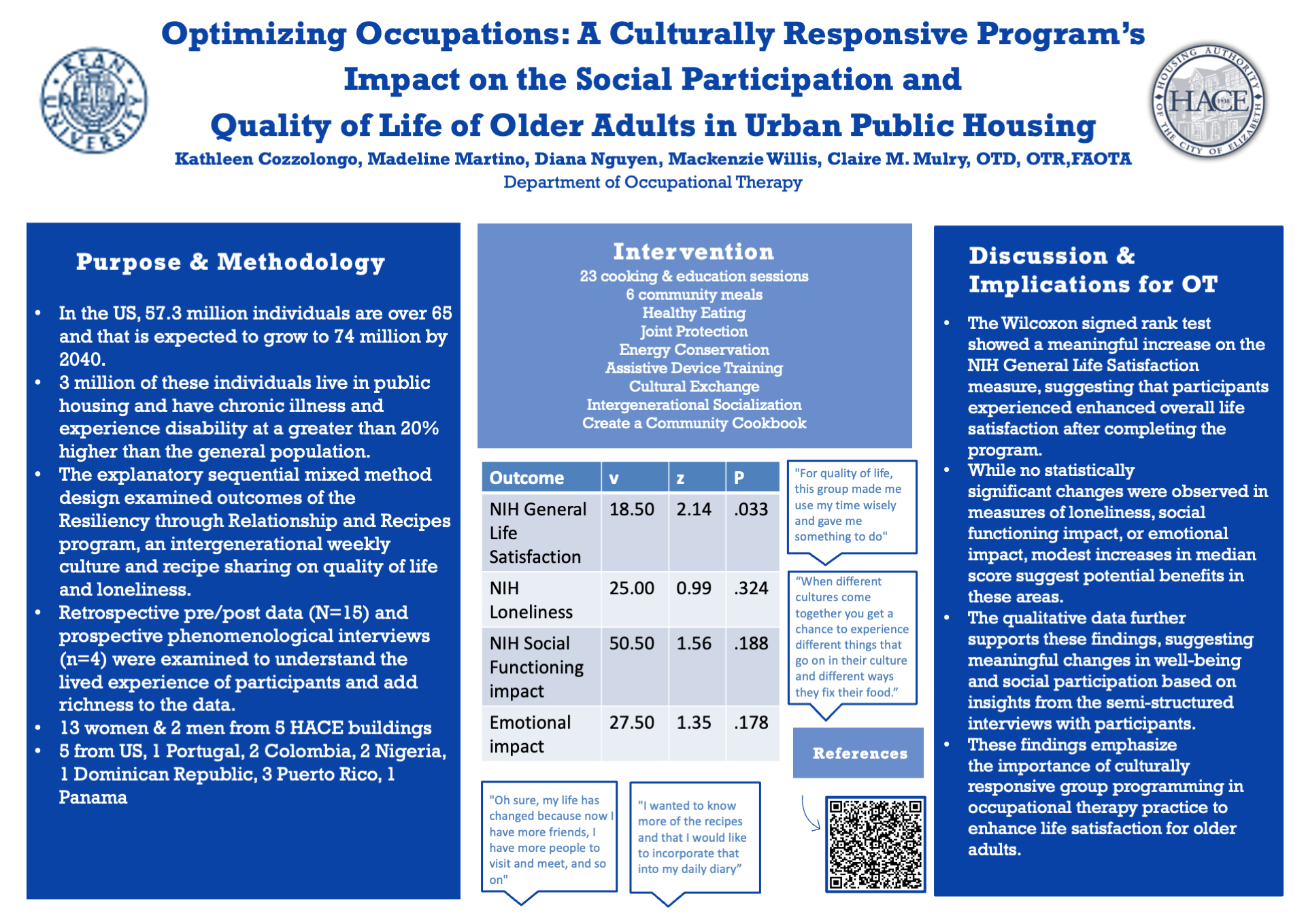
Introduction/Background: Currently, 17 percent (over 57.3 million) of the United Statespopulation is 65 or older and expected to leap to 22 percent (over 74 million) by 2040. Almost 3million of these individuals live in public housing and experience chronic illness at a higherpercentage than those under 65; with 41% having a disability versus 19.2% of the generalpopulation.Purpose: This study aims to investigate the outcome of the culturally responsive, Resiliencythrough Recipes and Relationships (RRR) program to determine its impact on participants'loneliness and quality of life.Methods: A sequential mixed methods study explored retrospective pre and post interventiondata including The General Life Satisfaction (NIH), Loneliness (NIH), Social FunctioningImpact (ASCQ-Me), Emotional Impact (ASCQ-Me), and the RRR pre/post intervention surveyand prospective semi-structured interviews captured the lived experience of four participants.Outcomes were analyzed using t-tests and thematic analysis to identify significance, correlation,and lived experience to add to the literature on interventions for older adults to enhance qualityof life.Conclusion/Significance & Novelty: Healthcare cost over 14.9 trillion dollars in 2023 and isanticipated to rise significantly with the aging population therefore it is imperative that culturallyresponsive, evidence-based programs better address the health and wellness needs of the agingpopulation be developed. This novel innovative intergenerational program meets this need.
Keywords: Occupation-based, Quality of Life, Public Housing, Loneliness, Culturally Responsive