
Exploring the diagnostic odyssey and challenges faced by parents of children diagnosed with SETBP1 haploinsufficiency disorder
Kelci Hill
Co-Presenters: Hayler Oyler
College: College of Health Professions and Human Services
Major: MS.GENTICOUNSLNG
Faculty Research Mentor: Josie Pervola
Abstract:
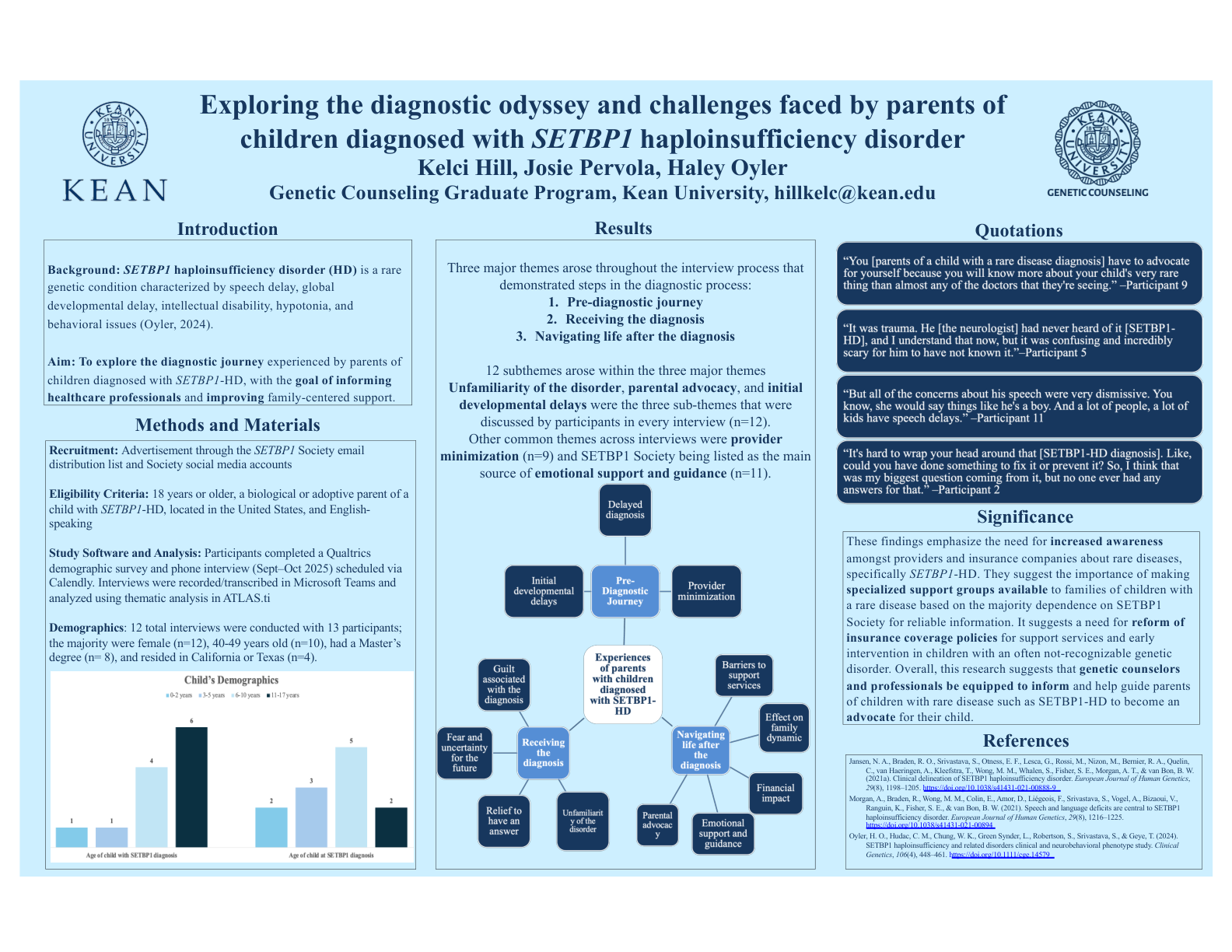
Abstract:PurposeSETBP1-haploinsufficiency disorder (HD) is a rare genetic condition characterized by a wide spectrum of symptoms, including speech delay, global developmental delay, intellectual disability, hypotonia, and behavioral issues. This research study explores the diagnostic journey and challenges experienced by parents of children diagnosed with SETBP1-HD, with the goal of informing healthcare professionals and improving family-centered support strategies.MethodsParticipants were recruited via emails through the SETBP1 Society and through social media posts on the SETBP1 Society Instagram, Facebook, and LinkedIn accounts. Eligible participants received a demographic survey and informed consent forms. Semi-structured interviews were conducted between September and October of 2025. Thirteen parents participated in 12 phone interviews lasting between 28 and 60 minutes, with an average of 47 minutes. Interviews were transcribed using Microsoft Teams, reviewed for accuracy by the researcher, and analyzed using thematic analysis with ATLAS.ti.ResultsThe results of the interviews indicate gaps in knowledge and understanding of SETBP1 haploinsufficiency disorder among healthcare providers and support staff, which has influenced the experiences of many affected families. Minimization of concerns by healthcare providers and continuous parental advocacy in navigating a diagnosis of SETBP1 haploinsufficiency disorder were among major themes in the study. The findings also highlight additional areas of support needed by affected families in relation to family and sibling dynamics, and financial considerations.ConclusionThese findings suggest the need for increased awareness of SETBP1 and SETBP1 haploinsufficiency disorder among healthcare professionals in the United States. They also underscore the importance of expanding support resources that address the family impact of a rare disease diagnosis, as well as additional financial considerations for families impacted by SETBP1 haploinsufficiency disorder.Key Words: Genetics, Diagnostic Journey, Rare Disease